Opinion
Those Who Own the Story Must Never Own Your Mind, or Our Democracy
Canadians have stopped trusting the news, and they are right to

Ten years ago, 55% of Canadians said they trust most news most of the time. This year, it is 37%, the lowest ever recorded in the Reuters Institute’s Digital News Report for Canada. Among English-speaking Canadians it is 35%.
That is not a blip. It is a verdict. Two out of three Canadians no longer believe what they are told by the outlets that claim to inform them, and the same survey shows why: 67% say media owners and their parent companies influence what gets covered.
Canadians are not confused. They have noticed who signs the cheques. And in an election season, the people who own the news are not just reporting the race. They are shaping it.
Who owns the news
The newspapers most Torontonians read are owned by a hedge fund, a billionaire family and a private-equity businessman. None of them answers to readers.
| Outlet | Who controls it |
|---|---|
| National Post, Toronto Sun and 100+ Postmedia titles | Chatham Asset Management, a New Jersey hedge fund that owns about two-thirds of the equity |
| The Globe and Mail | Woodbridge Co., the Thomson family holding company |
| Toronto Star, Metroland community papers | Jordan Bitove, sole owner of Torstar since 2022 |
Look at what that ownership has done. After Chatham took control, Postmedia centralized its newsrooms and cut so deeply that, according to journalists who spoke to the New York Times, its papers became near-copies of one another. Postmedia still owes Chatham more than $250 million in high-interest debt, so money that should pay reporters flows to a fund in New Jersey instead.
The Toronto Star, once a public trust run by a family voting trust, was taken private in 2020. Its finances are no longer open to public view.
This is the core problem. When the press is a financial asset, journalism becomes a cost to be cut. What survives is the coverage that suits the owner’s interests and keeps the advertisers comfortable.
How they pick the winners before you vote
Nobody has to rig a ballot. The work is done long before election day, in decisions most voters never see.
- Who gets covered. A handful of candidates are declared “frontrunners” in the first week. From then on they get the daily stories, the TV panels and the profiles. Everyone else is a footnote.
- Who gets on the debate stage. Media outlets set the invitation rules. Those rules lean on polls and name recognition, which the same outlets created through their coverage.
- Who gets called “serious.” A career politician with a party machine is “serious.” An engineer, a nurse or a small-business owner with a costed plan is an “also-ran.”
- Which ideas are “realistic.” Taxing the very rich, free transit or keeping public land public are framed as fantasies. Repeated property-tax hikes and handing public assets to private operators are framed as responsible.
- The “wasted vote” story. Then voters are told not to waste their vote on anyone the coverage ignored.
It is a closed loop. The media picks the contenders, covers only the contenders, polls only the contenders, and then tells you that only the contenders can win.
I ran for mayor in 2023 in a field of 102 candidates. I have seen this loop from the inside. The question that decided who was taken seriously was never “whose plan is better?” It was “who did the outlets decide to cover?”
It is a closed loop. The media picks the contenders, covers only the contenders, polls only the contenders, and then tells you that only the contenders can win.
The poll that picks the winner
The sharpest tool in that loop is the opinion poll. Before you believe one telling you who will win Toronto, ask four questions.
- Who paid for it? Polls are commissioned by media companies and private interests. The buyer decides when a poll is released and how it is framed.
- Who was asked? Many polls draw on online panels of people who signed up and are rewarded for answering. That is not a random sample of Toronto’s voters.
- Whose names were on the list? If a candidate is not offered as a choice, they score zero, and that zero becomes the headline.
- What happens next? The poll names the “frontrunners,” the coverage follows them, the next poll rewards that coverage, and you are told a vote for anyone else is wasted.
A poll is a snapshot of a conversation the pollster chose to have. On October 26, only one number counts: yours.
What it costs us
When the same few owners decide whose voice counts, the result is a city that keeps electing the people who built its problems. You cannot ask the architect of a problem to solve it, yet that is exactly the choice we are handed every four years.
On October 26, only one number counts: yours.
The cost shows up in our daily lives. Rent nobody can afford. A transit system that does not show up. An $18 billion repair backlog on the infrastructure we already own. These are not accidents. They are the record of leaders who were never seriously challenged, because the people who could challenge them were never given a fair hearing.
It also costs us our democracy. More Canadians now get their news from social media than from television, and 70% say they avoid the news at least some of the time. People are not walking away from information. They are walking away from gatekeepers who stopped serving them.
Take your vote back
Public money already props up these outlets through federal journalism subsidies. Canadians have every right to demand something in return:
- Open ownership. Every outlet that takes public money should publish who owns it, who lends to it and who controls its board.
- Fair election coverage. Outlets receiving public support should set clear, published rules for debate invitations and candidate coverage, decided before the campaign starts.
- Limits on concentration. No hedge fund or single owner should control most of the daily papers a city reads.
- Equal information for every voter. The City should give every registered candidate the same space to present their platform to residents, so no one’s choice depends on what a newsroom decided to print.
But no reform will arrive before October 26. Until then, the remedy is in your hands. Read every candidate’s platform for yourself. Go to the debates the big outlets did not organize. Ask why a candidate was never covered before you decide they cannot win.
The billionaire class has its favourites. It does not get to choose your mayor. You do.
Those who own the story must never be allowed to own your mind, or our democracy.
Stop falling for media lies. Vote Bahira.
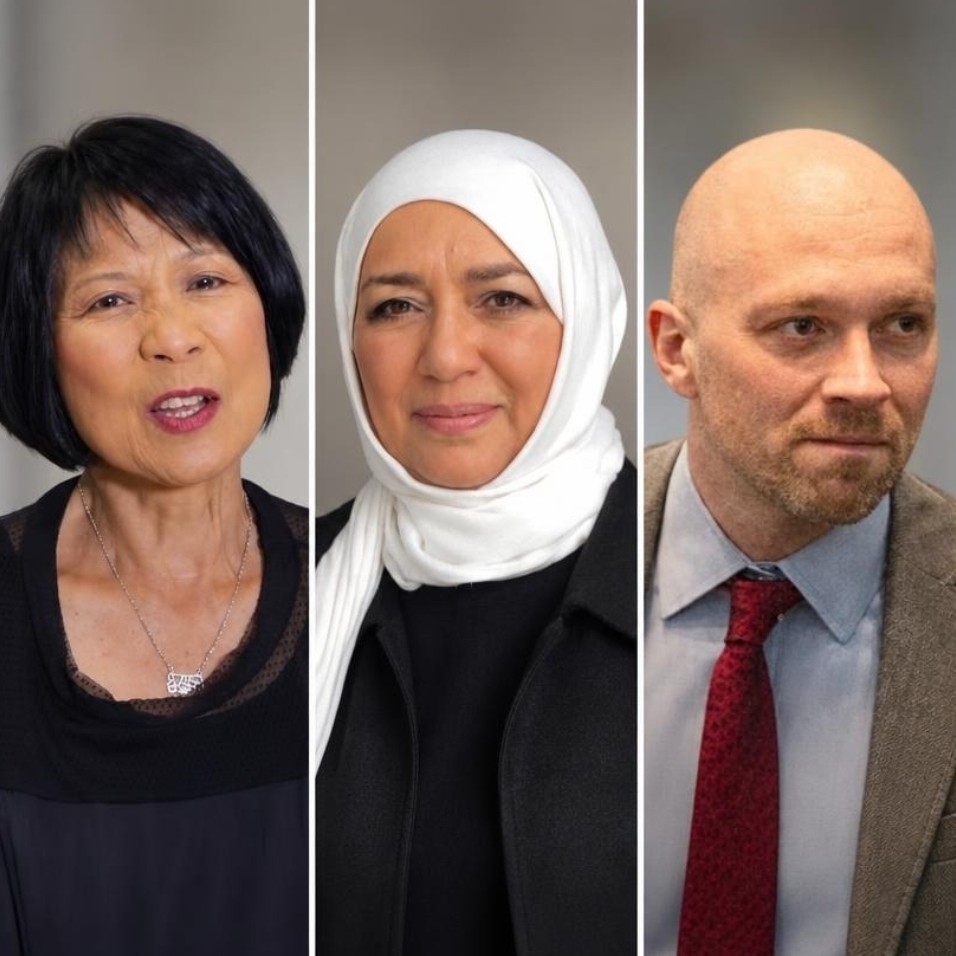
We know who they are backing and why they do. They make you believe you must choose between Olivia Chow and Brad Bradford, but in reality you are being played. They need to be voted out. A vote for Olivia Chow or Brad Bradford is a vote for the media that lied to us and continue lying. On October 26, vote Bahira Abdulsalam for Mayor of Toronto.

Dr. Bahira Abdulsalam, PhD, P.Eng., Candidate for Mayor of Toronto in the 2026 election, Founder, Be The Change Movement, bahira.ca
Sources
- Digital News Report Canada 2026, Centre d’études sur les médias: trust, news sources, avoidance and perceived owner influence
- Postmedia restructures debt to repay long-time lender, The Globe and Mail: Chatham’s stake and loans
- Postmedia Network: Chatham ownership and the New York Times account of centralization
- NordStar Capital buys Torstar, The Globe and Mail: Torstar taken private; Globe owned by Woodbridge
- Arbitrator awards Jordan Bitove ownership of Torstar, Media in Canada
Volunteer with us → | (647) 785-3729 | bethechangeno1@gmail.com

