About
About Bahira
Not a career politician. An engineer who fixes what’s broken.
I’ve spent my career building things that have to stand up, and holding the work to a standard. Toronto’s problems were built by the same people asking to keep managing them. It’s time to change the rules of the game.
About Bahira
An engineer for a city that has to work
Let’s engineer our solutions.
Dr. Bahira Abdulsalam, PhD, P.Eng. is an educator and structural and composite engineer, a former professor of construction project management in Ontario’s colleges, a published researcher, and founder of several grassroots movements, including the Be The Change Movement.
She holds a PhD in structural engineering from Université de Sherbrooke (Québec), a professional engineering licence, and has spent three decades researching, building, and creating grassroots movements. She ran for Mayor of Toronto in 2023 and works in English, French, and Arabic, seven years in Québec.
Expert in advanced composite materials for structural repair and rehabilitation, including internal reinforcement, grounded in her PhD research on FRP-reinforced concrete and professional structural engineering practice.
I am an independent candidate for Mayor of Toronto. I have ended my involvement with the Liberal Party of Canada, and I am not affiliated with any political party. I answer to Torontonians, not party leadership.
Research: PhD thesis · Google Scholar · ResearchGate
Her pitch is simple: bring an engineer’s discipline to City Hall, fix what we have, spend honestly, and put people first.
A fearless voice and defender of human rights for all.
My pledge to every resident
I will value every Toronto resident equally (regardless of religion, ethnicity, gender or colour) with equal dignity and fairness in city services, in hiring, and in decisions. I stand with every community in this city, without exception.
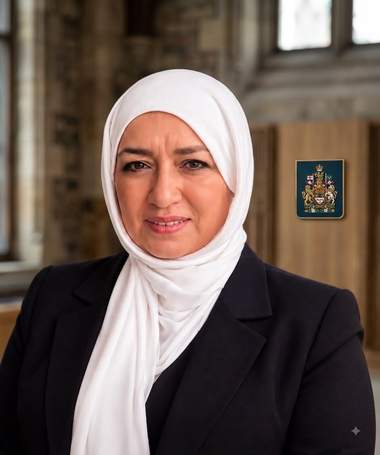
Dr. Bahira Abdulsalam
Independent · No party affiliation · Educator · PhD, P.Eng. · Founder, Be The Change Movement
Award-winning
Recognition for academic excellence, engineering leadership, and community service.
- Médaille du mérite Léonard de Vinci (Medal of Merit Leonard de Vinci), Faculty of Engineering, Université de Sherbrooke, November 2013 (the faculty’s highest student honour for academic, extracurricular, and professional merit.)
- Dream Phase Winner: AEM Infrastructure Vision 2050 Challenge (2016), for InfinitPipe® with QuakeWrap, jointless composite pipe manufactured onsite. Read →
- Bourse des ingénieurs-professeurs: Faculty of Engineering scholarship, Université de Sherbrooke.
- Queen Elizabeth II Platinum Jubilee Award: for community service; selected via Hon. Robert Oliphant, MP for Don Valley West (announced January 2023).
- Humanitarian Award: Women Helping Women Foundation Canada, International Women Leadership Conference and Award (April 2024).
Professional & community service
Ongoing roles in engineering peer review, mentoring, and community education.
Has served as a board member and on committees for several nonprofit and academic organizations (roles listed below).
Engineering & research
- Mentor: Black Engineers of Canada | Ingénieurs Noirs du Canada (Mar 2023-Present)
- Review Editor: Frontiers in Built Environment (Sustainable Design and Construction) (Dec 2022-Present)
- Judge: How to Change the World (Mar 2023-Present)
- Voting Member, ACI 440 subcommittee (research and development): American Concrete Institute (Nov 2022-Present)
- Technical Reviewer: Journal of the Institute of Conservation (Jan 2020-Present)
- Technical Reviewer: ASTM International (Advances in Civil Engineering Materials) (Jan 2018-Present)
- Guest Editor: ASCE (Practice Periodical on Structural Design and Construction) (May 2020-Present)
Community & education
- Women Committee Member: Canadian Arab Federation (CAF) (Apr 2023-Present)
- Parent Council Member: TDSB Community Services (Sep 2022-Present)
- Parent Engagement Committee Workgroup Member: TDSB Community Services (Feb 2023-Present)
- Parent representative, Ward 14: French as a Second Language Community Advisory Committee (FSACAC), Toronto District School Board (reelected; sworn in June 10, 2025-Present), advocating for French-language programming and parents across Ward 14 schools
- Former co-representative, Parent Involvement Advisory Committee (PIAC), Ward 14, TDSB (elected March 2023), parent voice for Ward 14’s schools (17 elementary + 3 secondary)
- Vice President of the student union and student representative, Faculty of Engineering, Université de Sherbrooke, represented Faculty of Engineering students during her PhD years in Québec
- Board Member: BAM, Books Art Music Collective (Oct 2020-Present)
Equal dignity for every Torontonian
Every human being has equal value
As Mayor of Toronto, I will stand for a simple principle: every human being has equal value. Every single one.
Toronto is home to people of different races, religions, cultures, languages and backgrounds. Our differences should never determine whose dignity is respected, whose safety matters, or whose voice deserves to be heard.
No race is superior. No community is disposable. No child, family, senior, newcomer or longtime resident should ever be treated as though their life matters less than another.
A great city is not measured only by its buildings, budgets and infrastructure. It is measured by how we treat one another, especially when we disagree.
Toronto needs leadership that confronts racism, hatred and discrimination while protecting the dignity and equal rights of everyone.
I want Toronto to be a city where we choose humanity over division, justice over discrimination, and compassion over indifference.
Love, justice and a little more kindness, for everyone, without exception.
Media coverage
In the News
Selected interviews and coverage from Toronto’s mayoral by-election and beyond.
Zoomer Radio AM740
Featured · Radio interview · The Morning Zoom with Sam & Jane · June 15, 2023 · 96.7 FM / AM740, Toronto
Joined The Morning Zoom for a candidate interview during Toronto’s 2023 mayoral by-election. Listen →
Respark Your Life (Raymond Aaron)
Featured · Podcast interview · Ep. 211, Immigrant to Mayor · May 11, 2023
Interviewed by Raymond Aaron on her journey as an immigrant engineer running for mayor of Toronto. Listen →
More coverage
- The Green Line (2023, candidate survey / election guide): featured in The Green Line’s 2023 Toronto mayoral election guide, sharing a vision for a more just, inclusive city. Read →
- Toronto Observer (June 25, 2023, news feature): interviewed on Toronto’s housing shortage and the contributions of immigrants to the city. Read →
- The Globe and Mail (June 2023, election coverage): listed among the registered candidates in Toronto’s 2023 mayoral by-election. Read →
- Radio-Canada International (April 26, 2025, reportage / interview): profiled as an independent candidate in Don Valley-Ouest during the 2025 federal election. Read →
How I’ll use the mayor’s powers
How I’ll use the mayor’s powers [City Hall delivers]
The province gave Toronto’s mayor strong powers. I will use them, for the people and against corruption and abuse of power.
I’ll use the budget authority to put residents first: free transit, affordable homes, and fixing what we have. I’ll use the veto to stop waste, blank cheques and deals made for insiders. I’ll use the hiring powers to remove anyone who abuses public trust and bring in leaders who deliver honestly, on time and on budget.
These powers will never be used to reward donors, protect friends or silence communities. Before I use them on a decision that affects a neighbourhood, the people there will be heard first, and I’ll publish what they said and how it shaped the outcome.
Strong powers in the wrong hands serve the few. In my hands, they’ll serve the people of Toronto and protect them from anyone who abuses power.
Freedom to speak and gather [City Hall delivers]
Deliver: Protect peaceful protest and free expression in public space. Public space belongs to the public.
A city that silences people is not a free city. As mayor I will protect peaceful protest and free expression in Toronto’s parks, squares, and streets. Disagreeing with someone is not a reason to push them out of public space.
A Human Rights Committee for everyone the City touches [City Hall delivers]
No Toronto resident should be discriminated against.
Every Toronto resident deserves freedom and dignity: freedom from discrimination by City services, and the freedom to speak, believe, and live as themselves under the Ontario Human Rights Code.
Economic empowerment starts with dealing with every resident with fairness and respect, and providing opportunity.
A city that treats its people fairly is a city where its people can build. When a resident is discriminated against by a City service, denied a fair chance at a City job or contract, or treated as less than equal at a City counter, that is not only a wrong in itself. It is a door to opportunity being closed. Fairness is not separate from prosperity. It is the ground prosperity is built on.
That is the spine of this plank, and it lines up with the Equality Pledge: value every Toronto resident equally, in city services, in hiring, in decisions.
We cannot allow those with the highest funding and the most powerful lobbies to shape City policy while ignoring other groups who have no funding or who are powerless, including migrants, people with disabilities, children, elderly residents, and low-income residents. That is why one committee covers all 17 protected grounds under the Ontario Human Rights Code, and why standing subcommittees for Race, Ethnicity and Newcomers, Disability and Accessibility, and Age (children, youth, and seniors), plus Economic Opportunity and Fair Access (receipt of public assistance and fair access to City jobs, contracts, and programs) and Intersectional Rights, matter. Every community is covered. No community is left out because it cannot hire lobbyists.
The promise
For the first time in history, the City of Toronto is developing its Human Rights Committee.
Toronto handles human rights today in four disconnected advisory committees that meet a few times a year, plus a staff unit most residents have never heard of. There is no single place a resident can bring a concern about how the City treated them. That is not accountability. That is a filing cabinet.
I will establish a standing Human Rights Committee at the City of Toronto: one accountable home for the human rights concerns of anyone who deals with the City or its services. It will cover City divisions and every agency and corporation the City is responsible for: the TTC, Toronto Community Housing, the Toronto Public Library, Toronto Paramedic Services, Toronto Public Health, RentSafeTO, shelters, parks and recreation, 311, licensing, and the contractors the City pays to deliver its services.
One committee. One door. A public report on what it hears and what changes because of it.
Fair to every resident, by design
This committee is built around the 17 protected grounds of the Ontario Human Rights Code. That choice is deliberate, and it is what makes “fair to all Toronto residents” a fact rather than a slogan.
Every resident is covered by these grounds. The structure does not pick one group as more deserving than another. It protects all of them at once. No community is singled out; no community is left out.
Standing subcommittees (clusters of grounds), plus intersectional:
1. Race, Ethnicity and Newcomers: race, colour, ancestry, ethnic origin, place of origin, citizenship
2. Faith and Creed: creed (all religions and beliefs, including non-belief and Indigenous spiritual practices)
Freedom of creed and belief means every resident, of every faith or none, is treated with equal dignity at City counters, in City hiring, and in City services. No resident is favoured or punished for what they believe or do not believe.
3. Disability and Accessibility: disability (physical, mental, developmental, learning; visible and non-visible)
4. Age: children/youth and seniors
5. Gender and Sexual Orientation: sex and pregnancy, gender identity, gender expression, sexual orientation
6. Family and Marital Status: family status, marital status
7. Economic Opportunity and Fair Access: receipt of public assistance (housing); fair access to City jobs, contracts, and programs
8. Intersectional Rights: any combination; discrimination by association; reprisal
Economic Opportunity and Fair Access is where the principle lives: hiring, procurement, program access, and treatment of residents receiving public assistance.
Deliver: Establish the Human Rights Committee as a standing body of Council, with staff support from the City’s Equity and Human Rights unit, and eight standing subcommittees. (Mayor forms committees, sets mandate, appoints chairs under strong-mayor framework.)
Deliver: Jurisdiction over City service delivery and agencies/corporations the City owns and funds. Where the City is landlord (TCHC), employer, or service provider, the obligation is ours.
Deliver: Consolidate scattered advisory bodies (Confronting Anti-Black Racism, Housing Rights, accessibility, and the rest) under one accountable committee.
Deliver: Resident-facing intake and advocate function: investigate, recommend, report publicly; works alongside, does not replace, the City Ombudsman.
Deliver: Hold City hiring, contracting, and program access to a fair-opportunity standard.
Deliver: Public accountability report each term: concerns raised, which services, what changes.
Advocate: Honest limit: formal complaints are decided by the Human Rights Tribunal of Ontario. This committee is not a tribunal. Help residents reach the right provincial or federal door when beyond municipal reach.
Advocate: Name the HRTO backlog honestly (long waits; many procedural dismissals). A city front-line body treats residents fairly at the source and relieves pressure. It does not replace the tribunal.
Advocate: Tenant gap: LTB cannot hear discrimination as such. On TCHC, close the gap directly. For private-market tenants: fund human-rights legal support bridging LTB and HRTO, strengthen RentSafeTO, municipal tenant advocate.
Advocate: Demand Queen’s Park fix: LTB power to hear/remedy discrimination, or force tribunal coordination.
Honest line: I am an engineer. I do not promise what the structure cannot carry. That boundary is the difference between a promise that holds and a promise that collapses the first time it is tested. I have spent a career being held to a professional standard. I will hold the City to one.
Draft Terms of Reference (for Council)
For adoption by City Council on the recommendation of the Mayor.
A. Purpose
The City of Toronto is committed to valuing every resident equally and to treating everyone who deals with the City and its services with fairness, respect, and equal dignity, regardless of any ground protected under the Ontario Human Rights Code.
The City recognizes that fair and respectful treatment is the foundation of economic opportunity: residents who are treated fairly in City services, hiring, contracting, and programs are residents who can fully participate in the city’s economic life.
A dedicated, standing mechanism is required to receive, examine, and advise on human rights concerns arising from the City’s own services, agencies, and corporations, and to give Council a single accountable channel for this work.
The Human Rights Committee (the “Committee”) is established to fulfil that purpose.
B. Mandate
The Committee’s mandate is to provide advice to City Council and to serve residents by:
1. Receiving and examining human rights concerns from anyone who deals with the City or its services: residents, service users, tenants of City-owned housing, applicants for City employment or contracts, and members of the public.
2. Overseeing the City’s own conduct across City divisions and the agencies, boards, and corporations it owns or funds, including but not limited to the Toronto Transit Commission, Toronto Community Housing Corporation, Toronto Public Library, Toronto Paramedic Services, Toronto Public Health, RentSafeTO, shelter and housing services, parks and recreation, 311, and municipal licensing.
3. Advising Council on policies, programs, and practices to prevent discrimination and remove systemic barriers in City service delivery, hiring, and procurement.
4. Coordinating standing subcommittees covering all protected grounds, so that every resident is covered and no concern falls between grounds.
5. Consolidating the work of the City’s existing equity-related advisory bodies, so their advice reaches Council through one senior standing channel.
6. Referring appropriately: helping residents identify and reach the correct provincial or federal body (including the Human Rights Tribunal of Ontario and Tribunals Ontario) where a matter lies outside municipal jurisdiction, and coordinating with the City Ombudsman where a concern falls within that office’s role.
7. Reporting publicly each year and each Council term on the concerns received, the City services from which they arose, and the outcomes and policy changes that followed.
C. Standing Subcommittees
The Committee operates through eight standing subcommittees, which together address all 17 protected grounds under the Ontario Human Rights Code:
a. Race, Ethnicity and Newcomers: race, colour, ancestry, ethnic origin, place of origin, citizenship;
b. Faith and Creed: creed, including all religions and beliefs, non-belief, and Indigenous spiritual practices;
c. Disability and Accessibility: disability in all its forms, visible and non-visible;
d. Age: with attention to both children/youth and seniors;
e. Gender and Sexual Orientation: sex and pregnancy, gender identity, gender expression, sexual orientation;
f. Family and Marital Status: family status, marital status;
g. Economic Opportunity and Fair Access: receipt of public assistance in housing, and fair access to City employment, contracts, and programs;
h. Intersectional Rights: discrimination on any combination of grounds, discrimination by association, and reprisal.
Each subcommittee includes public members with relevant lived experience and expertise, reports to the full Committee, and contributes to the Committee’s consolidated public report. Subcommittees may not direct City staff, bind the City, or act independently of the full Committee.
D. Jurisdiction and Limits
The Committee is a body of the City of Toronto. Its authority extends only to the City’s own services, conduct, agencies, and corporations.
The Committee is not a tribunal. It does not adjudicate legal complaints, does not make binding legal determinations, and does not award remedies. Formal human rights complaints are adjudicated by the Human Rights Tribunal of Ontario under the Ontario Human Rights Code.
The Committee has no jurisdiction over the Landlord and Tenant Board or any provincial tribunal. In respect of private-market tenants, the Committee’s role is limited to advising Council on municipal supports (tenant legal support to bridge the gap between the LTB and the Human Rights Tribunal, RentSafeTO enforcement, and a tenant advocate function) and to recommending advocacy to other orders of government for reform of the tribunals.
Any Committee recommendation requiring action by City officials or Council must be considered by the appropriate standing committee and, where necessary, approved by City Council. The Committee may not direct City staff or bind the City.
E. Composition and Term
The Committee is composed of members of City Council and public members appointed by City Council on the recommendation of the Civic Appointments Committee.
Public members are drawn to reflect the full diversity of Toronto’s communities across all protected grounds, and to staff the standing subcommittees with relevant lived experience and expertise, including tenants of City-owned housing.
The Chair and Vice-Chair of the Committee, and the chairs of each standing subcommittee, are appointed by the Mayor.
The term aligns with the term of Council.
F. Support and Governance
The City’s Equity and Human Rights unit provides policy and staff support; the City Clerk’s Office provides meeting management.
The Committee meets no fewer than six times per year, and additionally at the call of the Chair; subcommittees meet as needed to respond to concerns in a timely way.
The Committee operates transparently, with public meetings and the opportunity for residents to make deputations, subject to the City’s procedures and applicable privacy law.
A resident-facing intake process is maintained so that any person who deals with the City may bring a concern forward in plain language and in the language of their choice where reasonably possible.
Prepared for Dr. Bahira Abdulsalam, PhD, P.Eng. Founder, Be The Change Movement. bahira.ca
Responsible technology
Responsible Technology, Fairness & a Livable City
Toronto must use new tools without abandoning old duties: dignity, fairness, and a planet we can live on.
Responsible use of AI
As Mayor, I will set clear municipal standards for how City Hall uses artificial intelligence: transparency about where AI is used in city services, human oversight on decisions that affect residents, privacy protection, and no automated decision-making that locks people out of housing, benefits, or justice without a real human review path.
No affiliation with genocidal actors
City partnerships, procurement, and civic platforms should not normalize or reward actors engaged in genocide or crimes against humanity. Toronto’s purchasing, sponsorships, and institutional affiliations should reflect that moral floor.
Reduce income inequality and wealth inequality
A working city narrows the gap, not widens it. City Hall will use the levers it controls: fair taxes and relief for those who need them, living wages on city work, local opportunity, affordable housing and child care, and honest budgets, so ordinary Torontonians are not left carrying the load while wealth concentrates.
Climate change and environmental protection
Protect people and the commons: cut city energy waste, green city buildings and projects, fix water and flood infrastructure, grow canopy and clean air and water, and plan for a climate-ready Toronto, without selling off the land and water that belong to the public.
General concepts. Detail lives in the plan pages (energy, green buildings, water, housing, child care, property-tax fairness, and more).
Questions? Email bethechangeno1@gmail.com · Call (647) 785-3729

