Opinion
Bahira Abdulsalam: Why Olivia Chow and Brad Bradford Need to Go
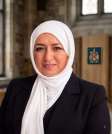
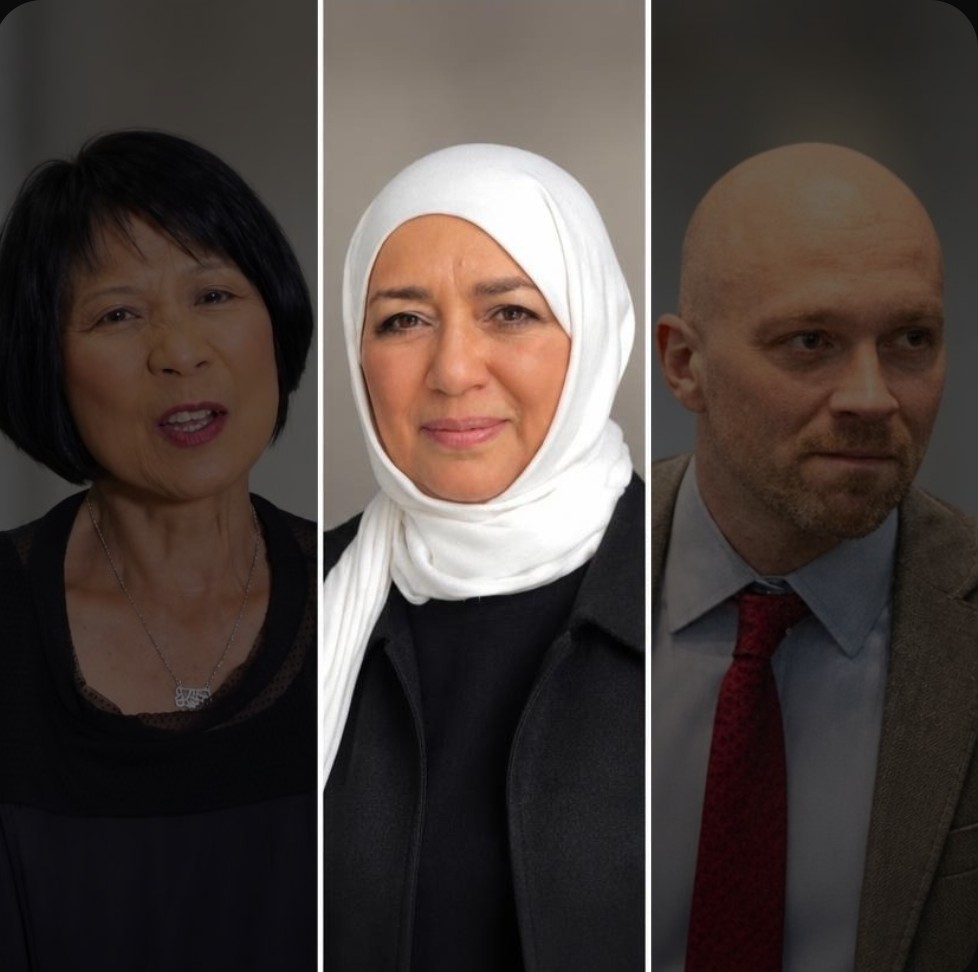
Toronto is being told it has two choices on October 26. Every poll, every debate stage and every headline frames this election as Olivia Chow versus Brad Bradford, and invites you to pick the one you fear less.
I want to offer a simpler test. You cannot ask the architect of a problem to solve it. Olivia Chow has run City Hall for three years. Brad Bradford sat on council for eight, chaired planning and housing, and sat on the TTC board. The city you are frustrated with today was built by both of them.
You cannot ask the architect of a problem to solve it.
I am running for a plain reason: neither of them represents me, or anyone I care about. Not the tenant choosing between rent and groceries. Not the small business owner watching the tax bill climb. Not the driver stuck on a bus that never comes. Not the parent, the senior, the newcomer or the student who has been told to wait their turn. If you feel the same, this election is not a choice between two options. It is a chance to stop settling.
I am also running because trust has been broken. Too many decisions at City Hall are shaped by the people who fund campaigns and lobby behind closed doors, not by the residents who live with the results. Developers, big contractors and well-connected insiders get heard first. Everyone else gets a deputation slot and three minutes. I will publish every lobbyist meeting, refuse access for donors, close the third-party dark-money loophole, and open city contracts to real competition, so that public resources serve the public.
This is not personal. Both are experienced public servants. But experience in producing the same results is not a qualification for producing different ones. Here is why both of them need to go.
Olivia Chow: you paid more, and got the bill timed for the ballot box
Olivia Chow raised residential property taxes 9.5% in 2024, the largest increase since amalgamation. She followed it with 6.9% in 2025. Then, in the year she faces voters, the increase dropped to 2.2%. That is more than 18% in one term.[1]
The question is not whether the city had a hole to fill. It did. The question is why the pain landed in the years without an election and the relief landed in the one with it. Over the same period the operating budget grew from about $16.2 billion in 2023 to $18.9 billion in 2026.[2] The 2026 number was held down by drawing heavily on reserves, which means the bill has not disappeared. It has been moved to 2027, after the votes are counted.
On housing, she promised big. In 2023 she pledged 25,000 rent-controlled homes on city land, built with the city as developer.[4] Three years later, her own campaign points to 22 projects under construction under the Toronto Builds framework.[3] Projects under construction are not keys in people’s hands, and the families on the waiting list know the difference.
On transit, she now offers a weekly fare cap after 10 paid rides.[3] That helps people who already ride ten times a week. It does little for the worker who has given up on the TTC because the bus never shows.
And then there is Queen’s Park. In 2023 Premier Doug Ford warned that electing her would be an “unmitigated disaster.”[5] This September he praised their “phenomenal relationship” and told voters to “read between the lines,” before his office said it was not an endorsement.[6] Under that relationship, Toronto handed the province control of Ontario Place’s future and stopped fighting the spa she had campaigned against. A mayor who gets along with the premier is useful. A mayor who stops standing up to him is not.
Then there is the festival circuit. Toronto’s festivals are part of what makes this city great, and they deserve steady, predictable support. What they got was money announced from a podium. In 2025, Chow unveiled a 33% jump in the city’s cultural festival grants and a 62% increase for Pride by 2027, each at a mayoral news conference.[22][23] In 2026, the cost of the World Cup Fan Festival rose from about $16 million to about $25 million, to be covered by money moved around inside the World Cup budget.[24] And while the stages went up, Torontonians were being sent to shelters. The city’s own budget notes say its shelter system held more than 9,800 people a night in 2025, and every night it logs the callers it has no bed for.[25] Festival stages make great photographs. They do not fix a water main, shorten the wait for a home or bring a bus on time. In an election year, a mayor should be seen at the repair yard and the shelter as often as in the spotlight.
Three years in, the story is a city that pays more, waits longer, and hears that the hard part is behind us. It is not.
Brad Bradford: promises on borrowed money, and the wrong fights
Brad Bradford wants you to believe he is the outsider. He is not. He has sat on council since 2018, chaired planning and housing, and served on the TTC board. When he ran for mayor in 2023, he finished eighth.
His platform this time is a long list of giveaways: a 25% cut to water bills, eliminating the municipal land transfer tax on homes below the average price, and more.[7][8] Chow’s campaign puts the price tag near $6 billion. Bradford’s own answer to how he pays for it is telling: he admits his plan means the city will borrow more than it does today.[7]
I am a structural engineer. I have spent my career on how infrastructure ages, fails and gets repaired. Toronto faces a repair backlog in the billions. Bradford’s budget plan would end the money the city sets aside from operations to pay for future capital work, roughly $256 million earmarked for 2027 and $369 million for 2028, and hand it back as tax cuts.[7] That is not fiscal discipline. It is skipping the maintenance and putting the repairs on the credit card. Water mains, bridges and transit do not care which party you belong to. They fail on schedule when you stop paying for them.
His water bill promise worries me for the same reason. Restructuring Toronto Water to cut bills by a quarter, in a city whose pipes are already overdue for renewal, is a promise that someone pays for later, in flooded basements or in a utility that slowly drifts from public hands.
And when he is not promising things he cannot fund, he is picking fights that divide us. A campaign that makes renaming a public square a headline issue is not a campaign about your rent, your commute or your child’s school.[9]
Your money: waste at City Hall and a police budget with no limit
Both candidates now talk about protecting taxpayers. Both have sat at City Hall while your money was spent badly.
Take the World Cup. In 2018, Toronto’s cost to host was estimated at $30 million to $45 million.[13] By the time the games were played, the hosting budget had reached $380 million, roughly ten times the figure council was given when it first backed a bid.[13] City staff signed a deal with MLSE, the private company that runs BMO Field, that left the city carrying the risk of cost overruns, and the city manager confirmed that the details were never made known to councillors or the mayor before the deal was binding.[14] After the final whistle, the city manager said it was still too soon to say whether the tournament came in on budget.[15]
The waste is not only in the headlines. The city’s own Auditor General found that Toronto paid for nearly $8 million in Microsoft 365 licences it never used between 2020 and 2024, after buying 10,000 licences for a network that could handle only 6,000 users.[16] Before that, the Auditor General found the city had overpaid snow-clearing contractors an estimated $7.1 million over five years because no one was checking the GPS data.[17] Chow was in charge for part of this. Bradford sat on council for all of it.
An engineer reads these as the same failure: nobody measuring what the public is actually getting for its money. That is what my independent gate reviews and public project dashboard are built to catch, before the money is gone, not years later in an audit.
Then there is policing, the city’s second-largest expense. Chow’s 2026 budget gave the Toronto Police Service another $93.8 million, a 7% increase, bringing its net budget to $1.43 billion.[18] It passed days after seven serving officers were criminally charged in a corruption investigation.[19] Her defence was that the increase had been agreed the year before. Meanwhile, Social Planning Toronto reported that for two years running, residents in its budget consultations named police as the top area where they wanted less spending, not more.[18]
Bradford’s answer is to spend far more. He promises to hire 1,000 new officers over four years and will not say what it would cost.[20] Using the police service’s own budget, one estimate puts the price above $143 million.[21] He makes this pitch while police say shootings are trending down.[20]
My test for the police budget is the same one I apply to a bridge or a water main: what are we getting for the money? I will take the mayor’s seat on the police board myself, demand value for every one of those 1.43 billion dollars, and invest in what stops violence before it starts: youth programs, jobs and violence interruption. No more blank cheques, for anyone.
What they agree on: restricting your freedoms
For all their debate-night sparring, Chow and Bradford agree on more than they admit. The clearest example is the “bubble zone” bylaw.
Bradford moved the original council motion for it in May 2024.[10][26] Chow voted for the final bylaw in May 2025, which passed 16 to 9.[11] It lets schools, daycares and places of worship apply to ban demonstrations within 50 metres, with fines of up to $5,000.[11] Everyone deserves to reach their place of worship or their child’s daycare safely, and harassment is already illegal. But a leaked opinion from the city’s own lawyers warned that the bylaw likely infringes the Charter.[12] Council passed it anyway.
Be clear about what this bylaw does. The Charter guarantees every one of us freedom of expression and freedom of peaceful assembly. Those freedoms were not written for the comfortable or the popular. They protect the tenant protesting a landlord, the worker on a picket line, the parent who disagrees with a school board and the community calling for peace. Harassment, threats and blocking someone’s way are already against the law. A bylaw that pushes peaceful protest 50 metres back under threat of a $5,000 fine does not target harassment. It targets speech. Once City Hall decides which voices may be heard and where, every voice is at risk, including yours.
As mayor, I will defend your right to be heard, and I will enforce the laws we already have against harassment and obstruction, equally, for everyone.
When the two leading candidates both back restricting peaceful assembly against their own legal advice, voters are not being offered a choice on the right to be heard. They are being offered the same answer twice.
That is the deeper problem. On the things that shape everyday life, both campaigns come from the same City Hall, the same habits and the same circle of insiders. They argue about who should manage the decline, not how to end it.
Why I am asking for your vote: an engineer, not a career politician
I am not asking you to pick the lesser of two insiders. I am asking you to vote for someone who represents you.
What I bring to City Hall
I have spent my career on one question: how do we build things that last, and how do we fix them when they don’t? That is the question Toronto needs answered now.
- A structural engineer at the highest level. A PhD in structural engineering from the Université de Sherbrooke, a bachelor’s degree in engineering from Cairo University and a postdoctoral fellowship in civil engineering at Western University. I am a licensed Professional Engineer in Ontario.
- A teacher of how big projects stay on budget. As a professor of construction project management at Ontario colleges, I trained the people who plan, cost and deliver the projects this city depends on.
- Research that makes infrastructure last. About 30 published studies on reinforcing and repairing concrete with fibre-reinforced polymers, materials that do not rust and can add decades of life to bridges, parking garages and buildings.
- Trained to make buildings greener. In 2025 I completed the Green Building Operators training program at the Labour Education Centre, as part of its first cohort of women, including CIET’s Sustainable Building Operator Fundamentals training in energy-efficient operations. It included building tours across Toronto, from a commercial site near Fairview Mall to a downtown building and Riverdale Collegiate Institute, to see first-hand how real buildings are run, maintained and how their waste is handled. In March 2026 I also toured the University of Toronto’s solar, battery storage and electric-vehicle charging sites, the clean-energy systems a climate-ready city will need. The program teaches how to run buildings so they use less energy, cost less to operate and cut emissions. Buildings are the largest source of Toronto’s emissions, so this is where a climate-ready city starts.
- Ready for the jobs of the future. In 2023 I graduated from YWCA Hamilton’s Uplift program in advanced manufacturing, which trains women for the field that turns new materials and technology into good local jobs. It is why my plan puts local businesses, local workers and new industries first in line.
- Trusted by my field. A member since 2007 of the American Concrete Institute’s Committee 440 on fibre-reinforced polymer reinforcement, which develops the guidance for these materials, and a voting member of its research and development subcommittee, and a member of a task group of the International Institute for FRP in Construction. I have served as a guest editor for the American Society of Civil Engineers and as a technical reviewer for ACI and ASTM International.
- Service to my community. Founder of the Be The Change Movement, parent representative for French-language schools on the Toronto District School Board’s Parent Involvement Advisory Committee, mentor with Black Engineers of Canada, and a recipient of the Queen Elizabeth Platinum Jubilee award in 2023.
- A voice for every neighbourhood. I speak English, French and Arabic, and I will listen to every community before decisions are made about it.
Chow and Bradford have spent years managing City Hall. I have spent mine learning how to fix what is broken, and teaching others to do the same.
That is the experience I will bring to the mayor’s office. My plan is built on seven promises:
- Fix what we have. Repair-first spending on the infrastructure we already own, not ribbon-cuttings.
- Homes you can afford. Keep public land public and build homes people can own on it, through community land trusts and long-term leases, never giveaways to developers.
- Transit that shows up. A fare-free TTC, phased in, paid for by the billionaire class paying its fair share and by pressing Queen’s Park and Ottawa to fund what is theirs to fund.
- No more blank cheques. A one-year freeze on residential property taxes, a public dashboard for every major project, and independent reviews before any project gets another dollar.
- Build local opportunity first. Local businesses and local workers first in line for city work.
- A city that educates, includes and grows. Libraries, child care, accessibility and real consultation with communities before decisions are made about them.
- Community safety. Prevention, violence interruption and accountable policing.
I am running because neither Olivia Chow nor Brad Bradford speaks for the people I care about. If they do not speak for you either, you do not have to settle.
Toronto will no longer throw its people away. It will be the place that takes care of its people, and I will change the rules of the game.
Why your vote belongs with me on October 26:
- Unlike Chow and Bradford, I have spent my career making infrastructure last, and the city’s biggest bill is fixing what it already owns.
- I will freeze your residential property taxes for a year and answer publicly for every dollar spent.
- I will defend your right to be heard, not restrict it.
- I have never held office at City Hall, so I am not here to defend its record. I am here to change it.
Vote Bahira Abdulsalam for Mayor, No. 2 on your ballot, on Monday, October 26.
Read the full plan at bahira.ca, and join the campaign at bahira.ca/volunteer.
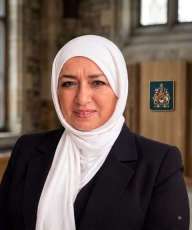
Dr. Bahira Abdulsalam, PhD, P.Eng., Candidate for Mayor of Toronto in the 2026 election, Founder, Be The Change Movement, bahira.ca
Volunteer with us → | (647) 785-3729 | bethechangeno1@gmail.com
Sources
- Toronto mayoral election four weeks away: property tax record (CP24)
- Bradford questions Chow’s $788M savings claim; operating budget growth (CTV News)
- Highlights from the Oct. 6 mayoral debate; Toronto Builds projects (Now Toronto)
- Chow’s 2023 pledge of 25,000 rent-controlled homes (ConstructConnect)
- Ford says Chow has his support (CTV News)
- Ford’s office says comments were not an endorsement (CP24)
- Bradford budget plan, borrowing and Chow’s $6B critique (CP24)
- Bradford’s 25% water bill promise (Now Toronto)
- Bradford’s Sankofa Square proposal (Spacing)
- Bradford moved the original bubble-zone motion (The CJN)
- Council passes bubble-zone bylaw 16-9 (The CJN)
- City lawyers’ opinion that the bylaw likely infringes the Charter (The Grind)
- World Cup cost grew from $30–45M to $380M (The Globe and Mail)
- MLSE deal not made known to council before signing (CTV News)
- City manager: too soon to say if World Cup came in on budget (CTV News)
- Auditor General on unused Microsoft 365 licences (Canadian Taxpayers Federation)
- Auditor General on $7.1M snow-clearing overpayments (CBC News)
- Police budget reaches $1.43B; Social Planning Toronto consultations (Toronto Life)
- Council adopts 2026 budget amid charges against seven officers (The Canadian Press)
- Bradford pledges 1,000 officers, won’t give cost (Global News)
- Estimated cost of 1,000 new officers (blogTO)
- Chow announces 33% increase in festival funding (City of Toronto)
- Pride funding to rise 62% by 2027 (CTV News)
- Fan Festival cost rises from $16M to $25M (Streets of Toronto)
- Toronto Shelter and Support Services 2026 Budget Notes (City of Toronto)
- Member Motion MM18.16, Requesting the Province to Create Safety Zones Around Places of Worship, by Councillor Brad Bradford, May 2024 (City of Toronto)

