Opinion
Keeping Toronto’s Children Safe
Every child, every neighbourhood: a plan for the whole of a child’s safety

Every parent in Toronto asks the same question each morning: will my child come home safe tonight? Too often, this city cannot promise yes.
In August 2025, eight-year-old JahVai Roy was killed by a stray bullet while lying in bed in his North York home. Two months earlier, a 15-year-old boy was shot dead near Jane Street. In Ontario, the average child pulled into sex trafficking is recruited at 13. About a quarter of Ontario students in Grades 7 to 12 say they were bullied online in the past year.
These are not separate problems. A child who is bullied, lonely, out of school or out of care is the child a trafficker or a gang looks for first. Safety is one system: the school, the street, the screen, the home and the neighbourhood. When one part fails, the others are tested. This article sets out what is happening to our children, and what a mayor can actually do about it.
Safe to learn
A safe child starts with a safe place to learn. Toronto’s public schools carry a repair backlog of more than $4 billion. Leaking roofs, failing ventilation and broken heating are safety problems, not cosmetic ones. As a structural engineer, I know what deferred maintenance becomes when it is ignored long enough.
School buildings and curriculum belong to the province and the school boards, not the mayor. But the city controls the places children spend the rest of their day:
- Toronto Public Library: a free, supervised, warm place after school for children whose parents work late.
- Child care: the city manages fee subsidies and runs its own centres; families wait too long for a subsidized space.
- Recreation and after-school programs: the hours between 3 p.m. and 6 p.m. are when unsupervised children are most exposed to harm.
Parents must be partners in all of these, with a real voice in the city’s own children’s programs and full transparency about what their children are offered.
Bullying, in the schoolyard and online
Bullying no longer ends at the school gate; it follows children home on their phones. In CAMH’s 2025 Ontario student survey, about one in four students in Grades 7 to 12 said they were bullied online in the past year, and a similar share were bullied in person at school.
The same survey found 46% of students reported moderate to serious psychological distress, and about one in eight often or always feel lonely. A child who feels alone is easier to isolate, groom and exploit. That is why bullying is a safety issue, not only a discipline issue.
What works is adults who notice early and act: trained staff in every city youth program, clear reporting routes children trust, and quick access to mental-health help. The city can require all three in its recreation centres, libraries, camps and child-care programs.
Youth violence and guns
Guns are reaching younger hands in Toronto, and children are paying with their lives. Toronto Police reported 59 youth firearm arrests in 2022, 78 in 2023 and 128 in 2024, with 102 more by September 2025. By that point, more than a dozen young people had been charged in Toronto murder investigations in 2025 alone.
Children are victims as well as accused. A 16-year-old boy was among Toronto’s first homicide victims of 2025. An eight-year-old died in his own bed.
Arrests come after the harm is done. Youth advocates in this city have said for years that the best answer to crime is a good job, a safe place to go and an adult who shows up. Prevention is cheaper than prisons and far cheaper than funerals. Gun laws and bail are federal and provincial; the city’s job is to make sure no child is left with nothing to do, nowhere to go and no one to call.
Child sex trafficking and sexual abuse
Child sex trafficking is child sexual abuse, and it is happening in Toronto now. Ontario accounts for roughly two-thirds of police-reported human trafficking cases in Canada. Most of them are sex trafficking.
The facts parents need to know
- The average age of recruitment is 13. More than 70% of victims identified by police are under 25.
- About 22% of police-reported victims are children under 18, and 95% are women and girls. Boys are targeted too, especially online.
- Most victims are trafficked by someone they know: a so-called boyfriend, a friend, sometimes another teenager. It is rarely a stranger in a van.
How it happens
Trafficking almost always begins with grooming. An older person offers attention, gifts, money, a place to stay or drugs, and builds trust and dependence. The child is slowly cut off from family and friends. Then the “debt” is called in and the abuse begins. Much of this now starts on social media and gaming platforms.
The online threat
The screen in a child’s bedroom is now a doorway. Reports of the online luring of children to Cybertip.ca, Canada’s national tipline, rose 815% between 2018 and 2022. Sextortion (tricking a child into sending an intimate image, then blackmailing them) is rising fast, and teenage boys are the most common target. These offenders often operate from outside Canada.
A new warning: “The Com”
Durham Regional Police have warned parents about “The Com”, short for “the Community”: coordinated online groups that groom, manipulate and coerce children aged 8 to 17. Durham police say they have already responded to several local incidents believed to be linked to these groups. Children in Toronto use the same apps, so Toronto parents should treat this warning as their own.
The groups find children on Discord, Telegram, Snapchat, Roblox, Minecraft, Twitch and Steam. They start with friendship or romantic attention, then use fear, guilt and shame to keep the child silent. Victims are pushed into making sexual images, hurting themselves, others or animals, or committing crimes such as hoax 911 calls (“swatting”). Threats to expose private information, or to send police to the family’s home, keep the child under control.
Durham police say to watch for several of these signs together:
- Encrypted apps such as Discord or Telegram used without a parent’s knowledge
- Withdrawal, secrecy, mood changes or falling grades
- More time on the phone, or hiding it
- Interest in extreme or harmful online ideas
- A new online contact the child seems unusually attached to, or afraid of
Talk to your child about the apps they use and who they talk to, without judgement. Keep access to their accounts and check them regularly, especially group chats. (Durham Regional Police: online safety)
Warning signs
A child may have new expensive items with no explanation, a much older “boyfriend” or friend, a second phone, unexplained absences or nights away, sudden secrecy, or pulls away from family and old friends. No single sign proves anything. Several together mean it is time to act: talk to your child, and call for help.
What the city can do
- Fund the Toronto Police Human Trafficking Enforcement Team and child-exploitation units properly, with a victim-centred approach, through the mayor’s seat on the Police Service Board.
- Use city licensing of hotels, short-term rentals, taxis and rideshare to require anti-trafficking training and reporting.
- Give survivors priority access to safe social housing and long-term support.
- Protect youth leaving care, the group traffickers target most, with housing, mentors and jobs.
- Train every city worker who serves children (librarians, recreation staff, camp counsellors, shelter workers) to recognize the signs and report.
Child protection agencies, criminal law and the Amber Alert system sit with the province and Ottawa. A mayor must press them hard, and must never wait for them to act first.
Getting to school safely
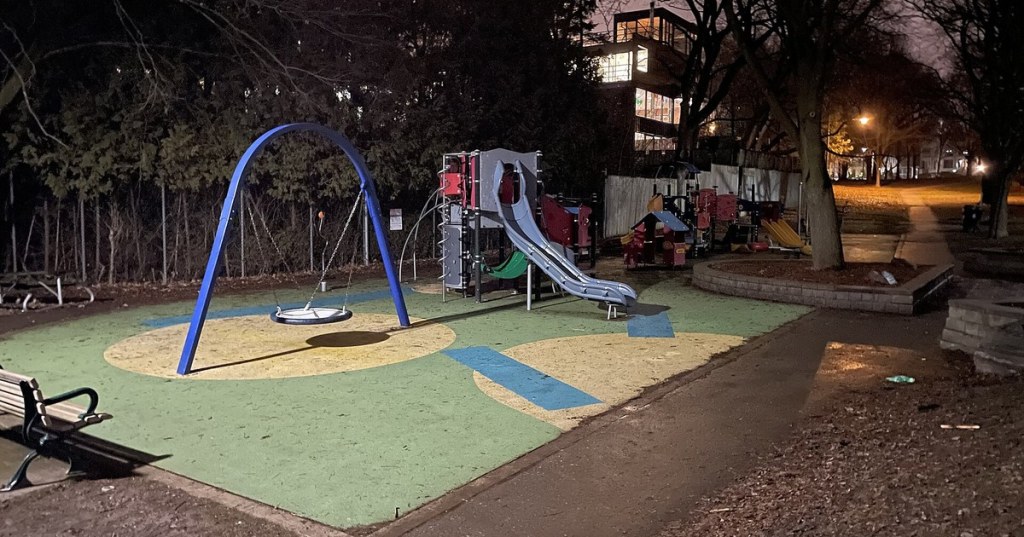
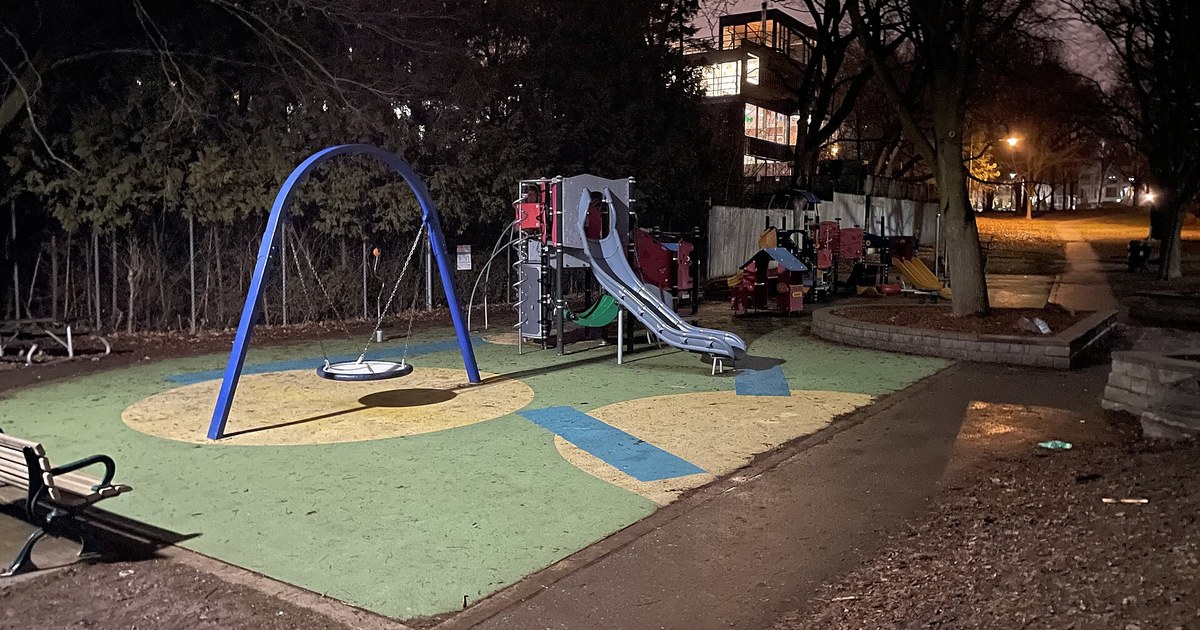
The walk to school should be the safest part of a child’s day, and the city controls every metre of it. Streets, sidewalks, crossings, lighting and snow clearing are municipal responsibilities. Every school zone needs slower traffic, well-marked crossings, crossing guards where children cross busy roads, working lights and sidewalks cleared in winter. Parks and playgrounds need lighting, maintenance and staff presence so families feel safe using them.
Why I stand here: the 1 Million March 4 Children
I did not come to this issue as a politician. I came to it as a voice for parents. In September 2023, families from every faith and background walked together in the 1 Million March 4 Children, in Toronto and in cities across Canada. I was proud to co-found that movement and to serve as its national spokesperson.
Having stood as a candidate for mayor that same year, I spent those months listening to parents. Their message was simple. They wanted their children protected from sexual abuse, exploitation and trafficking. They wanted a real voice in what their children are taught and exposed to. And they wanted their religious freedoms respected. They were asking to be partners, not spectators, in raising their own children.
That march is where this plan was born. These are the commitments I will carry into City Hall.
What I will do as mayor
| Commitment | Who delivers |
|---|---|
| Take the mayor’s seat on the Toronto Police Service Board myself, and make child exploitation, trafficking and youth gun violence top priorities in the police budget | City: I deliver |
| Fully resource the city’s anti-trafficking strategy, survivor housing and victim services | City: I deliver |
| Require anti-trafficking training and reporting in city-licensed hotels, short-term rentals, taxis and rideshare | City: I deliver |
| Train every city worker who serves children to spot and report abuse, trafficking and bullying | City: I deliver |
| Expand after-school, recreation, library and summer youth programs, with first jobs for teenagers, in every neighbourhood | City: I deliver |
| Give parents a real voice and full transparency in the city’s own children’s programs | City: I deliver |
| Move sexually explicit books out of the children’s and youth sections of public libraries | Toronto Public Library board: I will press for it |
| Keep dedicated boys’ and girls’ washrooms for children in parks and city facilities, with single-user rooms added as an option | City, within the Ontario Human Rights Code |
| Safe school zones: slower traffic, crossing guards, lighting and cleared sidewalks | City: I deliver |
| Fix crumbling schools and strengthen child-protection agencies and online-safety laws | Province and Ottawa: I will advocate |
A mayor cannot do everything. But a mayor decides where the city’s money goes, what its workers are trained to see, and whether children are treated as the priority they are.
What parents can do today
- Talk early and often with your children about online safety, secrets and who they can tell. Make sure they know they will never be in trouble for asking for help.
- Know who your child talks to, online and off, and notice sudden changes in friends, money or behaviour.
- If a child is sextorted, do not pay and do not delete anything. Report it.
Where to get help
- Immediate danger: 911
- Canadian Human Trafficking Hotline: 1-833-900-1010 (24/7, confidential)
- Cybertip.ca, for online luring, sextortion and intimate images: 1-866-658-9022 or cybertip.ca
- Kids Help Phone, for any child or teen who needs to talk: 1-800-668-6868, or text 686868
- Children’s Aid Society of Toronto, if you are worried about a child’s safety: 416-924-4646
Our children cannot wait
The families who marched in 2023 were not asking for anything radical. They were asking that their children be safe, that their voices be heard and that their faith be respected. Three years later, the guns are in younger hands, the predators are on our children’s phones and too many families still feel unheard.
Toronto will no longer throw its people away, and it will start with its children. A city that cannot protect a child sleeping in his own bed has not done its job. I will.

Dr. Bahira Abdulsalam, PhD, P.Eng.
Candidate for Mayor of Toronto
Co-founder and national spokesperson, 1 Million March 4 Children
Founder, Be The Change Movement
bahira.ca
Sources
- Ontario human trafficking: average age of recruitment, share of national cases (The Globe and Mail)
- Statistics Canada figures on child and female victims (University of Windsor)
- Cybertip.ca luring reports up 815% (CBC)
- Teen boys most targeted for sextortion (Global News)
- CAMH 2025 Ontario student survey: bullying, distress, loneliness (Narcity / Canadian Press)
- Toronto youth firearm arrests 2022–2025 (CP24)
- 8-year-old killed by stray bullet, North York (CP24)
- 15-year-old killed in shooting near Jane St, Weston / Mount Dennis area (CBC)
- 16-year-old victim, Toronto’s second homicide of 2025 (CTV)
Vote Bahira.
On October 26, vote Bahira Abdulsalam for Mayor of Toronto.
Volunteer with us → | (647) 785-3729 | bethechangeno1@gmail.com

