
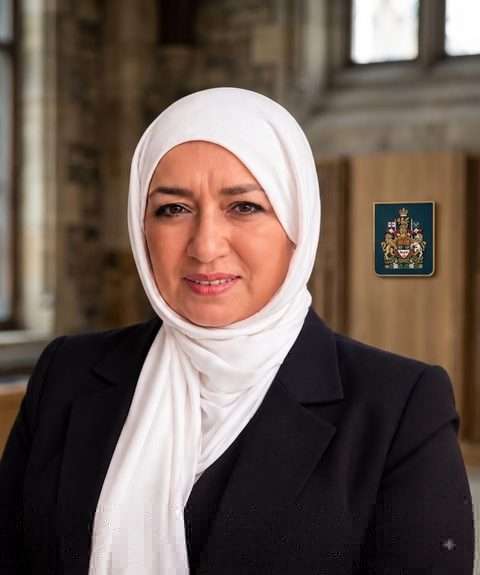
Independent candidate for Mayor of Toronto
Toronto needs an engineer.
Power back to the people.
Let’s engineer our solutions.
Money in your pocket. Homes for all. Justice for all.
Dr. Bahira Abdulsalam, PhD, P.Eng. has spent three decades researching, building, and creating grassroots movements, and she’s done asking the architects of the problem to fix it. Fix what we have, spend honestly, put people first, and put power back in the hands of the people.
Election day · October 26, 2026
Countdown to election day
39
days until Monday, October 26, 2026
Toronto needs an engineer. Mark your calendar, and vote.
Vote by mail, apply by Thu Sep 24, 2026, 4:30 p.m.
Request your package on MyVote before the deadline. Details in How to vote.
Latest from TikTok
From @bahiraabdulsalam
Campaign news
What’s new
A public accessibility commitment, a vote-by-mail deadline this week, and a plan for Toronto’s workers.
Deadline · Sep 24, 4:30 p.m.
Vote by mail this week
Request your package on MyVote before Thursday’s cutoff. You do not have to wait for October 26.
Sep 19 · Accessibility
Public commitment to CNIB
Accessible transit for people who are blind, partially sighted, or Deafblind — consult, fix barriers, report in the open.
Labour
Standing with workers
A living wage for City work, public services kept public, and protections for gig and non-union workers.
Seven promises
What I’ll deliver for Toronto
A plan built around what a mayor actually controls — with the honest work of fighting for the rest.
Promise 1
Fix what we have
Toronto manages ~$215B in infrastructure and an ~$18B repair backlog. I’m an engineer — fix what we own first. Special case: the Gardiner — I will take charge of city properties, not hand them to the province. Get it back. Get it fixed. Toronto is not for sale.
Promise 2
Homes you can afford
Keep public land public and put homes you can own on top of it — plus more affordable housing and real protection for tenants.
Promise 3
Transit that shows up
A free TTC for everyone, running often and on time. This city needs to flow more smoothly.
Promise 4
No more blank cheques
Honest budgets, open books, independent audits, a live projects dashboard, and a full public accounting of World Cup spending.
Promise 5
Build local opportunity first
Local businesses and hiring first, neighbourhood incubators in empty storefronts, and lower taxes for small business.
Promise 6
A city that educates, includes and grows
Libraries, affordable child care, accessibility, and a city that treats every resident equally.
Promise 7
Community safety
Guns and trafficking, violence interruption, the drug crisis as safety and health, a safer TTC, and ending human trafficking — with accountable policing and real supports.
Not a career politician. An engineer who fixes what’s broken.
I’ve spent my career building things that have to stand up, and holding the work to a standard. Toronto’s problems were built by the same people asking to keep managing them. It’s time to change the rules of the game.
About Bahira
An engineer for a city that has to work
Let’s engineer our solutions.
Dr. Bahira Abdulsalam, PhD, P.Eng. is an educator and structural and composite engineer, a former professor of construction project management in Ontario’s colleges, a published researcher, and founder of several grassroots movements, including the Be The Change Movement.
She holds a PhD in structural engineering from Université de Sherbrooke (Québec), a professional engineering licence, and has spent three decades researching, building, and creating grassroots movements. She ran for Mayor of Toronto in 2023 and works in English, French, and Arabic, seven years in Québec.
Expert in advanced composite materials for structural repair and rehabilitation, including internal reinforcement, grounded in her PhD research on FRP-reinforced concrete and professional structural engineering practice.
I am an independent candidate for Mayor of Toronto. I have ended my involvement with the Liberal Party of Canada, and I am not affiliated with any political party. I answer to Torontonians, not party leadership.
Research: PhD thesis · Google Scholar · ResearchGate
Her pitch is simple: bring an engineer’s discipline to City Hall, fix what we have, spend honestly, and put people first.
A fearless voice and defender of human rights for all.
My pledge to every resident
I will value every Toronto resident equally (regardless of religion, ethnicity, gender or colour) with equal dignity and fairness in city services, in hiring, and in decisions. I stand with every community in this city, without exception.
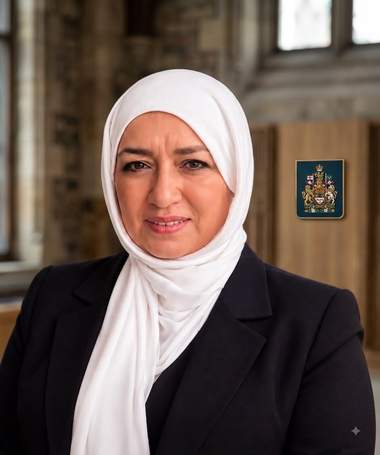
Dr. Bahira Abdulsalam
Independent · No party affiliation · Educator · PhD, P.Eng. · Founder, Be The Change Movement
Award-winning
Recognition for academic excellence, engineering leadership, and community service.
- Médaille du mérite Léonard de Vinci (Medal of Merit Leonard de Vinci), Faculty of Engineering, Université de Sherbrooke, November 2013 (the faculty’s highest student honour for academic, extracurricular, and professional merit.)
- Dream Phase Winner: AEM Infrastructure Vision 2050 Challenge (2016), for InfinitPipe® with QuakeWrap, jointless composite pipe manufactured onsite. Read →
- Bourse des ingénieurs-professeurs: Faculty of Engineering scholarship, Université de Sherbrooke.
- Queen Elizabeth II Platinum Jubilee Award: for community service; selected via Hon. Robert Oliphant, MP for Don Valley West (announced January 2023).
- Humanitarian Award: Women Helping Women Foundation Canada, International Women Leadership Conference and Award (April 2024).
Professional & community service
Ongoing roles in engineering peer review, mentoring, and community education.
Has served as a board member and on committees for several nonprofit and academic organizations (roles listed below).
Engineering & research
- Mentor: Black Engineers of Canada | Ingénieurs Noirs du Canada (Mar 2023-Present)
- Review Editor: Frontiers in Built Environment (Sustainable Design and Construction) (Dec 2022-Present)
- Judge: How to Change the World (Mar 2023-Present)
- Voting Member, ACI 440 subcommittee (research and development): American Concrete Institute (Nov 2022-Present)
- Technical Reviewer: Journal of the Institute of Conservation (Jan 2020-Present)
- Technical Reviewer: ASTM International (Advances in Civil Engineering Materials) (Jan 2018-Present)
- Guest Editor: ASCE (Practice Periodical on Structural Design and Construction) (May 2020-Present)
Community & education
- Women Committee Member: Canadian Arab Federation (CAF) (Apr 2023-Present)
- Parent Council Member: TDSB Community Services (Sep 2022-Present)
- Parent Engagement Committee Workgroup Member: TDSB Community Services (Feb 2023-Present)
- Parent representative, Ward 14: French as a Second Language Community Advisory Committee (FSACAC), Toronto District School Board (reelected; sworn in June 10, 2025-Present), advocating for French-language programming and parents across Ward 14 schools
- Former co-representative, Parent Involvement Advisory Committee (PIAC), Ward 14, TDSB (elected March 2023), parent voice for Ward 14’s schools (17 elementary + 3 secondary)
- Vice President of the student union and student representative, Faculty of Engineering, Université de Sherbrooke, represented Faculty of Engineering students during her PhD years in Québec
- Board Member: BAM – Books Art Music Collective (Oct 2020-Present)
Media coverage
In the News
Selected interviews and coverage from Toronto’s mayoral by-election and beyond.
Featured · Radio interview
Zoomer Radio AM740
The Morning Zoom with Sam & Jane · June 15, 2023
96.7 FM / AM740, Toronto
Joined The Morning Zoom for a candidate interview during Toronto’s 2023 mayoral by-election.
Featured · Podcast interview
Respark Your Life (Raymond Aaron)
Ep. 211 — Immigrant to Mayor · May 11, 2023
Podcast interview
Interviewed by Raymond Aaron on her journey as an immigrant engineer running for mayor of Toronto.
More coverage
Candidate survey / election guide
The Green Line
2023
Featured in The Green Line’s 2023 Toronto mayoral election guide, sharing a vision for a more just, inclusive city.
News feature
Toronto Observer
June 25, 2023
Interviewed on Toronto’s housing shortage and the contributions of immigrants to the city.
Accessibility for people with disabilities
I endorse the Accessible Ontario Pledge
The AODA Alliance asked Ontario’s political parties to make a clear 10-point Accessible Ontario Pledge after the province missed the January 1, 2025 accessibility deadline. As an independent candidate for Mayor of Toronto, I endorse that pledge.
What a mayor can deliver: finish TTC accessibility, keep elevators working and fix Wheel-Trans; clear sidewalks and curb cuts; expand accessible and supportive housing on city land; and expand tax and utility relief for low-income seniors and people with disabilities.
What I’ll fight for at Queen’s Park: strong AODA leadership and enforcement; education, health-care, built-environment and accessible-housing standards; no backsliding on disability rights; accessible elections; and reform of Ontario’s broken human-rights complaint process, the full Accessible Ontario Pledge roadmap.
- 1. Meet and work with the disability community, including the AODA Alliance
- 2. Strong leadership and a public multi-year accessibility action plan
- 3. No backsliding on the AODA or disability rights
- 4. Stronger accessibility standards: including education, health care, built environment, and housing
- 5. Faster development of accessibility standards
- 6. Real AODA enforcement with public reporting
- 7. Use every lever of government so public money never creates new barriers
- 8. Accessible provincial and municipal elections
- 9. Remove new disability barriers created by government decisions
- 10. Fix Ontario’s dysfunctional human-rights tribunal process
Read the full pledge on the AODA Alliance website. Endorsing this pledge is not an endorsement of this campaign by the AODA Alliance.
Justice for all
I pledge to fight anti-Palestinian racism
As an independent candidate for Mayor of Toronto, I endorse the Vote Palestine call to address anti-Palestinian racism and protect freedom of expression on Palestine, and I endorse the Arab Canadian Lawyers Association (ACLA) framework for naming and confronting anti-Palestinian racism.
ACLA describes anti-Palestinian racism as a form of anti-Arab racism that silences, excludes, erases, stereotypes, defames or dehumanizes Palestinians or their narratives. I oppose anti-Palestinian racism the same way I oppose Islamophobia, antisemitism, anti-Black racism, and every form of hate directed at any community.
What a mayor can deliver: equal dignity and fairness in city services, hiring, and decisions; protect the right to peaceful protest and speech in public space; strengthen Access T.O. so every resident can use city services without fear; and make sure city institutions do not silence, exclude, or defame Palestinians or their allies.
What I’ll fight for beyond City Hall: full recognition of anti-Palestinian racism in Canada’s Anti-Racism Strategy and in Ontario’s anti-racism work; protection of free expression and civil rights for peaceful advocacy for Palestinian rights, including Boycott, Divestment and Sanctions (BDS); and an end to the chilling of speech in workplaces, schools, universities, and public institutions.
- Name and fight anti-Palestinian racism using the ACLA framework
- Protect peaceful advocacy and free expression on Palestine
- Fair city services and hiring for every resident, without exception
- Stand against Islamophobia and antisemitism alongside anti-Palestinian racism
Learn more: Vote Palestine platform · ACLA anti-Palestinian racism resources. Endorsing these frameworks is not an endorsement of this campaign by Vote Palestine or ACLA.
Community safety initiatives
A mayor leads the files that matter most. I answer for the whole city, but some files are too important to hand off and hope for the best. Four carry my name, my time, and my accountability: community safety, infrastructure, housing, and transit.
I will take the Mayor’s seat on the Toronto Police Service Board myself.
The board sets police priorities, hires and holds the Chief accountable, and approves the largest single budget in the city — that is not a table to send a stand-in to. As a member I’ll push for policing that reduces harm: real accountability, spending justified line by line, and community safety built with neighbourhoods, not imposed on them. If a decision affects a community, that community is consulted first.
Everyone deserves to feel safe — on their street, in their park, and on the TTC. Gun violence and the drug crisis are tearing at neighbourhoods, and I won’t look away.
1. Guns & trafficking
Focused, accountable policing through the Police Services Board against illegal guns and gun trafficking — disrupt supply with police and partners.
2. Violence interruption
Expand proven violence-interruption and youth outreach that reaches kids before crews do — keep young people in recreation and community centres, not on the corner.
3. Drug crisis — safety & health
Treat the drug crisis as both public safety and public health: more treatment and harm-reduction where it saves lives, more enforcement against traffickers, and crisis workers so overdose and mental-health calls get the right response.
4. Safer TTC
More staff and lighting, well-kept public spaces, and results for every safety dollar — not just a bigger budget.
5. Protect children & end trafficking
Resource human-trafficking and child-exploitation units through the Police Services Board, strengthen the city’s End Trafficking strategy and survivor supports, and require anti-trafficking training and reporting in hotel, rideshare and short-term-rental licensing.
6. What I’ll fight for
Courts, bail, firearms law, border guns and major drug prosecutions are provincial and federal — I’ll press for tools and funding that hold violent offenders accountable and support victims.
Honest budgets · Community safety
Police funding must buy safety — not waste.
I will not hand the Toronto Police Service a huge budget that isn’t used effectively. Every resident deserves to feel safe — and every tax dollar for policing should show results: lower gun violence, faster response where it matters, safer TTC, and real accountability through the Police Services Board.
Context: Toronto’s 2026 police operating budget is about $1.70 billion gross / $1.43 billion net — roughly a $94 million (7%) increase over 2025. That’s a large share of city spending. Size alone is not a safety plan.
Results, not blank cheques
Fund what works. Demand clear outcomes for overtime, hiring, and specialty units — results for every safety dollar, not just a bigger budget.
Accountable through the Board
I take the Mayor’s seat myself — not a stand-in. That board sets priorities, hires and holds the Chief accountable, and approves the city’s largest budget. I’ll push for policing that reduces harm: real accountability, spending justified line by line, transparent reporting, no access-for-donors culture, and community safety built with neighbourhoods — if a decision affects a community, that community is consulted first.
Safety is more than policing
Violence interruption, youth outreach, crisis response, treatment, and community centres prevent harm before a cruiser is the only tool left. Fund prevention alongside enforcement.
Safe streets. Honest books. Power back to the people.
Trust and justice with Indigenous peoples
Toronto is built on Indigenous land, traditional territory of many nations, covered by Treaty 13 and the Williams Treaties. A land acknowledgement matters. Restoring trust and justice takes action.
Reconciliation measured in action, not words, in city land, naming, hiring, and genuine partnership with Indigenous communities.
We can’t get ahead by violating human rights. That is the moral floor.
A wealthy country where First Nations still boil drinking water is a political choice about whose life is endangered.
Land is our greatest wealth, once land and waters are damaged, money cannot buy them back. Homes and lands are not for sale.
1. City land
Use city land decisions as reconciliation in practice, partnership on how public land is held, shared, and developed, not as a one-time announcement.
2. Naming
Names on streets, places, and city spaces should honour Indigenous peoples and history, decided with communities, not imposed on them.
3. Hiring
Indigenous people should see themselves in city hiring and leadership, real pathways into city work, not token representation.
4. Genuine partnership
Work with Indigenous nations and urban Indigenous organizations as partners, listen first, fund Indigenous-led priorities, and follow through.
5. Honour the treaties
Toronto is covered by Treaty 13 with the Mississaugas of the Credit, and the Williams Treaties. City decisions should respect those relationships, not treat them as history only.
6. Honest about power
Many tools of justice sit with the province and Ottawa. Where city hall can act, I will. Where it can’t, I’ll fight openly, and say the difference.
Signature policy · Clear the Lanes
Toronto in Motion
A plan to get the city unstuck
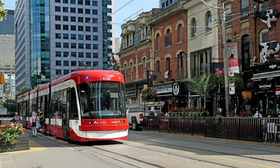
The problem
Toronto is one of the most gridlocked cities in Canada. Last year the average driver lost about 100 hours (more than four full days) sitting in traffic. Here’s what City Hall won’t say out loud: we already own the fastest way to move people, and we let it crawl in traffic behind private cars.
Nearly 80 million streetcar rides last year, and four of the TTC’s five busiest surface routes are streetcars. One streetcar carries about 250 people; a bus carries 50 to 90. We don’t have a streetcar problem. We have a transit-trapped-in-traffic problem. Free, frequent, on-time transit is how we win riders back and cut gridlock.
Manage it, complain about it, or fix it
Olivia Chow manages congestion, her plan is literally called the “Congestion Management Plan.” Brad Bradford complains about it, with a slogan and light-rail promises that carry no rider until 2030. I’ll fix it. I’m an engineer: diagnose the real bottleneck and fix the flow. That’s the whole job.
Keep the TTC ours
The TTC must stay publicly owned and municipally governed: accountable to riders, not privatized, and not run by Queen’s Park or Metrolinx for local fare and service decisions. I will fight Bill 98 and any move that strips Toronto of final authority over fares, service, and operations. Local control is how we deliver free, reliable transit, not surrender the keys.
The plan
Clear the Lanes · RapidTO
Clear the Lanes means dedicated transit lanes and signal priority as a connected network, including RapidTO bus and streetcar corridors. Keep the streetcars and free them from traffic.
Streetcar reform, network-wide
Priority lanes, signal priority, accessible boarding, left-turn bans where they trap lines, and real enforcement against blockers. One streetcar moves ~250 people, trapping it in traffic is a policy failure.
Stop the blockers
One illegally-parked car freezes a whole line. Enforce it.
Slow zones & state of good repair
Eliminate subway slow zones with real state-of-good-repair funding, repair-first capital, not another study. More frequent service, not cuts.
Smart signals & hotspot surgery
Signals that respond to real traffic, on a published timeline. Right vehicle, right route, the numbers decide, not ideology.
Dig once
Coordinated construction and real lane-closure fees. Open a street, fix it, reopen it, once.
Free TTC, freeze, Fair Pass, students
My destination is a free, reliable TTC. Until full free transit is funded: a fare freeze, lower monthly/weekly caps, Fair Pass phase 3 for low-income riders, and partnerships with colleges and universities on student affordability. Free transit is a congestion plan, it gets people out of cars.
Accessibility that shows up
Fully fund the TTC’s 10-year wayfinding strategy; protect and expand door-to-door Wheel-Trans; prioritize curb clearing at Wheel-Trans, bus, and streetcar stops after snowstorms, pay for verified hours cleared, not standby theatre.
Safer TTC, care first
Expand Toronto Community Crisis Service (TCCS) across the TTC network; platform edge doors starting at busy stations like Bloor-Yonge; more staff visibility and lighting. Mental-health crisis response belongs with trained crisis workers.
Housing upstream of the TTC
Upstream housing and shelters so no one has to sleep on the TTC. Housing-first, supportive housing, and real options, the subway is not a shelter system.
The Gardiner
140,000 vehicles a day. “It isn’t ours anymore” is not an answer. Negotiate hard with the province for real fixes, not a fantasy tunnel.
How we pay for it
Tax the billionaires: press Queen’s Park and Ottawa for operating and capital dollars from wealth and corporate fair-share tools those governments can actually levy, so riders are not the cash cow. City tools I control: a commercial parking levy (a small daily charge on non-residential spaces) raises roughly $100M to $490M a year, dedicated to getting the city moving, with no toll booths. Already used in New York, Montreal, Vancouver, Chicago and San Francisco.
The bottom line
Chow manages congestion. Bradford complains about it. I’ll end it: by getting transit out of traffic, keeping local control of the TTC, and funding service so fares aren’t the plan.
Let’s get Toronto moving.
Dr. Bahira Abdulsalam, PhD, P.Eng. · Founder, Be The Change Movement · bahira.ca
Special case · Fix what we have
The Gardiner is not for sale.
Toronto is not for sale.
The Gardiner Expressway is one of Toronto’s most important assets. Uploading it to the province is the worst answer a mayor can give, it walks away from the job instead of fixing what we own. Toronto is not for sale.
As mayor, I will take charge of city properties. I will not hand them to the province. I’m an engineer who has spent an academic and professional life researching how to make our structures safer and more durable. I will get the Gardiner back, and get it fixed.
- Take charge of city properties: no handoff to the province
- Engineer’s standard: safer, more durable structures from a lifetime of research and practice
- Get it back. Get it fixed.: repair-first, not walk-away
Get it back. Get it fixed. Power back to the people.
Parking & traffic tickets
Fair tickets, not a cash grab
Tickets should keep people safe and keep streets clear, not quietly pad a budget. As mayor, I’ll reform what City Hall controls, and press Queen’s Park hard on what it doesn’t.
City Hall, parking tickets
Most parking tickets are a City Hall file. I’ll reform so penalties are fair, the rules are clear, and disputes and payment are workable, not a maze designed to wear people down. Enforcement should focus on real safety and access problems: hydrants, accessible spots, and blocking transit or bike lanes, not gotcha revenue.
Queen’s Park, moving & traffic tickets
Speeding, red-light, and most other moving tickets sit under the provincial Highway Traffic Act. A mayor can’t rewrite the fine schedule alone, but I will press Queen’s Park for fair fine schedules. The city still influences camera programs and enforcement priorities, and I’ll use that leverage so safety comes first, not a cash grab.
City Hall, buildings & parking that actually works
I’ll require buildings to meet real standards for parking spots: proper dimensions, accessible parking that actually works, and no fake or inadequate spots that only look fine on paper.
City Hall delivers parking bylaws, enforcement priorities, disputes/payment systems, and building parking standards. I’ll fight at Queen’s Park for fair HTA fine schedules, and use every city lever on cameras and priorities in the meantime.
Engineer’s approach to congestion
Partner with traffic-innovation institutions
Toronto already has world-class traffic research sitting next door to City Hall. As mayor, I’ll partner with those institutions so proven tools get onto our streets, not stuck in papers and pilots.
Who I’ll work with: the University of Toronto Transportation Research Institute (UTTRI) and its ITS Centre and Testbed; Toronto Metropolitan University and other Ontario universities doing intelligent-transportation work; ITS Canada and applied tech partners; and City Transportation Services / TTC so operations and research stay in the same room.
- Scale adaptive and AI signal control that’s already been tested with the City of Toronto
- Use evidence (delay, safety, transit reliability) before locking in corridor changes
- Train city staff and keep a standing innovation pipeline, not one-off pilots that die
- Keep public data and privacy standards clear when sensors and cameras support the network
City Hall delivers the partnership agenda, signal network, and deployment budget. These institutions advise and co-develop, they don’t run the city. Naming them is not an endorsement of this campaign.
Special case · Public land
The waterfront and islands are not for sale.
Toronto is not for sale.
Little Norway Park, the Toronto Islands, and our harbourfront belong to the people of Toronto — not to a provincial land grab for airport expansion, and not to private interests that treat the waterfront as a deal to flip.
Ontario’s Bill 110 gave the province power over city waterfront and island land tied to Billy Bishop expansion. Ottawa rejected jets after Torontonians said no. The law that seized that power is still on the books. As mayor, I will fight to repeal it, return the land to Toronto, and keep our parks and islands public.
Repeal Bill 110
End the provincial power grab. Return Little Norway Park and Toronto Islands land to city control.
No jets. No land flip.
Protect the waterfront from airport expansion that trades parks, housing, and quiet shores for noise, pollution, and congestion.
Public waterfront forever
Stand with Torontonians defending parks and islands — keep harbour land for people, nature, and a city that works.
Return our waterfront. Keep the islands public. Power back to the people.
Shelter & homelessness
A real answer to homelessness
Shelter is never a destination — an emergency bed is a bridge to a permanent home. The mayor runs Toronto’s shelter system. I will make it safe, humane, and housing-focused — and keep demanding the housing, health, and income supports only the province and Ottawa can fully fund.
Organizing principle
Shelter is never a destination — an emergency bed is a bridge to a permanent home.
Where we are
About ~8,925 people used Toronto’s shelter system on a single night in Nov 2025, and about ~9,637 were “actively homeless” over the prior 3 months — more than doubled in 3 years. On average about ~148 people were turned away nightly in Sep 2025 (down from 200+ in 2024 as fewer refugee claimants). The City is opening 1,275 additional shelter spaces for winter 2025–26; advocates say it is still not enough.
Toronto Public Health: about ~300 deaths of people experiencing homelessness in 2023; 331 in 2022; for women experiencing homelessness the median age of death was 36; overdose is a leading cause — why safe women-only spaces matter. People get stuck without permanent housing exits — HousingTO 2020–2030 is the spine.
What a mayor can deliver
Deliver
Move people home — every shelter stay paired with a housing plan and a worker; expand housing-focused shelter, rapid rehousing, rent supports, and supportive housing; ties to keeping public land public.
Deliver
No one turned away into the cold — expand capacity and 24h respite; end nightly turn-aways; year-round planning, not a winter scramble.
Deliver
Safety, privacy, dignity as standards city-wide — protect and expand women-only and family spaces; trauma-informed design; more private/single-room capacity; staffing, security, health and harm-reduction; a working complaint process.
Deliver
Single-user universal washrooms across the shelter system and all city facilities — private, lockable, accessible.
Deliver
Encampments — humane: offer indoor options people will accept (safe, private, room for a partner, pet, and belongings) plus a real path to housing — not sweeps-first.
What I’ll fight for
Housing, health, and income supports need the province and Ottawa — a mayor pushes for them.
Advocate
Supportive housing, mental health/addictions, and income supports funding.
Advocate
A fair federal share of asylum-claimant costs downloaded onto the city.
Honest line
The mayor runs the shelter system and can make it safe, humane, and housing-focused, ending homelessness needs the province and Ottawa on housing, health, and income. Deliver the first; never stop demanding the second.
An emergency bed is a bridge. Permanent homes (and the care that keeps people in them) are the destination.
A plan for Toronto
The full plan, and an honest split
Every plank is labelled by who has the power to deliver it. If it’s the city’s to do, I’ll do it. If it belongs to the province or Ottawa, I’ll fight for it, and tell you the difference.
● City Hall delivers this ● I’ll fight for this (provincial / federal)
Money in your pocket
Audit first, then build on what’s underway [City Hall delivers]
Toronto already has major builds in motion, the Ontario Line, Scarborough Subway Extension, Eglinton Crosstown West, Gardiner rehab, and waterfront / Port Lands work. I won’t throw them out. I will put an engineer’s audit on schedule, cost, contracts, and delivery first, then finish what works, fix what doesn’t, and stop waste before we add new megaprojects.
Some of these are provincial Metrolinx projects. City Hall still owes residents a clear audit of city costs, local impacts, and whether delivery matches the promise.
Snow cleared by the hour. New York style [City Hall delivers]
The problem: Toronto’s winter contracts lean hard on daily standby rates. A big share of the bill pays for equipment to sit ready, whether a plow clears your street or not. Residents still wait too long on side streets and sidewalks, and the city burns money on idle capacity instead of hours worked.
How this helps: Like New York City, we’ll pay supplemental labour and hired equipment by the hour when a storm hits (shovelers, operators, and plows) with published rates and verified hours. You pay for snow cleared, not for waiting. That frees budget for the crews who actually dig out neighbourhoods, brings local labour onto fair hourly shifts, and makes winter maintenance efficient instead of a blank cheque for standby.
Housing you can afford [City Hall delivers]
I’ll never sell off or give away public land to developers. We’ll keep it public and put homes you can own on top of it, through community land trusts and long-term (99-year) leases, so you own your home at a fraction of the price while the land stays public forever. Plus more affordable homes and real protection for tenants.
Rent rules and tenant law are provincial. I’ll press Queen’s Park to strengthen them.
A real answer to homelessness [City Hall delivers]
Shelter is never a destination, an emergency bed is a bridge to a permanent home.
About ~8,925 people used Toronto’s shelter system on a single night in Nov 2025, and about ~9,637 were “actively homeless” over the prior 3 months, more than doubled in 3 years. On average about ~148 people were turned away nightly in Sep 2025 (down from 200+ in 2024 as fewer refugee claimants). The City is opening 1,275 additional shelter spaces for winter 2025-26; advocates say it is still not enough.
Toronto Public Health: about ~300 deaths of people experiencing homelessness in 2023; 331 in 2022; for women experiencing homelessness the median age of death was 36; overdose is a leading cause, why safe women-only spaces matter. People get stuck without permanent housing exits. HousingTO 2020-2030 is the spine.
Deliver
Move people home: every shelter stay paired with housing plan + worker; expand housing-focused shelter, rapid rehousing, rent supports, supportive housing; ties to keeping public land public.
Deliver
No one turned away into the cold: expand capacity + 24h respite; end nightly turn-aways; year-round planning not winter scramble.
Deliver
Safety, privacy, dignity as standards city-wide: protect/expand women-only and family spaces; trauma-informed design; more private/single-room capacity; staffing, security, health/harm-reduction; working complaint process.
Deliver
Single-user universal washrooms across shelter system and all city facilities, private, lockable, accessible.
Deliver
Encampments, humane: offer indoor options people will accept (safe, private, room for partner/pet/belongings) + real path to housing; not sweeps-first.
Advocate
Supportive housing, mental health/addictions, income supports funding.
Advocate
Fair federal share of asylum-claimant costs downloaded onto the city.
Honest line: the mayor runs the shelter system and can make it safe, humane, and housing-focused, ending homelessness needs the province and Ottawa on housing, health, and income. Deliver the first; never stop demanding the second.
Tackle poverty, not just its symptoms [City Hall delivers]
In a city this wealthy, poverty is a choice we can change. Alongside homes people can afford, free transit and food security, I’ll use the tools only the city has: expand the Fair Pass so low-income residents get discounted transit and recreation, help people get the benefits they’re already owed, pay a living wage to city workers and contractors, and run a real, funded poverty-reduction plan with targets we actually track and report.
Hot lunch at school next year, end food insecurity for kids [City Hall delivers]
I commit to ending food insecurity at schools and delivering hot lunch to our children, hot lunch soon, starting next year. No kid in Toronto should sit through class hungry in a city this wealthy.
I’ll put City Hall behind universal hot-lunch delivery, funding, kitchens, and partnerships with schools and community agencies, so every student can get a real hot meal at school. I’ll also keep using the city’s land, kitchens and partnerships for community food programs, support for food banks, and community growing.
School boards and provincial education funding still matter. I’ll press Queen’s Park and the boards to match that commitment with full, permanent program funding.
Our roads, our transit, our traffic, our call.
Fix what we have, and keep it ours [City Hall delivers]
I’m an engineer, so I’ll start where the honesty starts: Toronto faces roughly an $18 billion 10-year state-of-good-repair funding gap (2025-2034): the City’s own Asset Management Plan gap versus the capital plan. Most of that pressure is transit and Toronto Community Housing, with about $2 billion on the road network and more on city facilities. Every year we defer maintenance, the bill grows and the risk rises. A city that can’t take care of what it already has hasn’t earned the right to announce anything new.
And I won’t do what the current deal does, give our infrastructure away to make the repair bill someone else’s problem. The Gardiner Expressway and the Don Valley Parkway were built for Toronto, paid for by Toronto, and driven by Torontonians every day. Under the 2023 Ontario-Toronto New Deal, ownership and responsibility for the Gardiner and DVP are set to transfer to the province in fall 2027. They call it a win. I call it giving away the keys to our own city. When the province owns those highways, the province decides how they’re maintained, when they’re closed, whose priorities come first, and no Toronto resident can vote a premier out over a road in their own city.
Handing our own infrastructure to the province isn’t a deal. It’s a retreat. A confident city keeps what’s core to governing itself and demands fair funding as its right, not as a reward for surrendering control.
Deliver: a repair-first capital plan, fix and maintain what we own before announcing anything new, with condition data and engineering priority setting the schedule instead of the political calendar.
Deliver: refuse to complete the Gardiner/DVP handover and keep them in Toronto’s ownership, maintained and decided here.
Deliver: treat road safety on aging structures as a Toronto responsibility, an elevated expressway over people’s heads must answer to a government they can hold accountable.
Advocate: renegotiate the New Deal so a fair-funding arrangement leaves us in control, a fight to conduct from strength, not a switch a mayor flips alone.
Honest note: the upload is a signed intergovernmental agreement, and unwinding it takes provincial agreement. I won’t pretend a mayor can reverse it unilaterally. But no mayor is obligated to finish handing away a Toronto asset, and I won’t.
Run the network as one system [City Hall delivers]
You cannot fix traffic on a road you don’t control, and you cannot manage traffic one project at a time. Today the decisions about road work, transit construction, lane closures and detours are scattered across Transportation Services, the TTC, utility and watermain crews and private contractors that don’t coordinate. That fragmentation is the congestion problem.
Deliver: one coordinating authority over road and transit construction citywide, so corridors aren’t all torn up at once, detours are planned around real neighbourhoods, and the Gardiner and DVP are never fully disrupted in the same week. Not a new layer of bureaucracy, one accountable hand on a wheel too many people are grabbing at once.
Deliver: manage the space that clogs the core with a modest levy on large commercial parking lots, eases congestion where it’s worst and raises real money. City staff most recently estimated about $100-108 million a year (2025 update; 2024 staff range was about $100-150 million depending on the rate), dedicated to transit. This is not a toll on your commute.
Deliver: keep freight and deliveries moving with smarter loading rules, so a double-parked truck doesn’t shut a lane at rush hour.
Advocate: coordinate with provincial transit. Metrolinx and subway expansion, so the whole network is planned as one.
Transit that shows up, and it’s free [City Hall delivers]
The fastest way to get cars off a congested road is to give people a better option. So I’ll do what no Toronto mayor has had the courage to do: make the TTC free for everyone. Free transit is the most direct congestion relief there is, it puts money back in people’s pockets, and it treats transit as the public good it is, like a library or a park, not a turnstile business.
I won’t pretend property tax alone can carry this. Here is the honest funding spine: the TTC collects roughly $1.0-1.1 billion a year in passenger fare revenue: replacing that is the core annual cost of free fares, before any extra operating cost if ridership grows.
Deliver: the decision itself, the TTC is city-run, so making it fare-free is mine to make.
Deliver: fund it from what the city can reach, the commercial parking levy above, plus the luxury-home, vacant-home and high-value land-transfer taxes already in this platform.
Deliver: reliable service, frequency that shows up, working elevators, faster Wheel-Trans, and the accessibility work finished so every station serves everyone.
Deliver: phase it in, starting with the riders for whom the fare is the biggest barrier and building to universal, funded at every step, never a cliff.
Advocate: a permanent operating partner from the province and Ottawa, the way every other order of government funds the systems it depends on.
Streets that move, and keep people alive [City Hall delivers]
A street works when everyone on it gets home safely: the driver, the cyclist, the child walking to school, the senior crossing with a cane.
Deliver: a real Vision Zero effort at the intersections and corridors where people are actually being hurt, not a plan on a shelf.
Deliver: the basics that get ignored, accessible sidewalks and curb cuts, reliable sidewalk snow clearing, Seniors Safety Zones.
Deliver: a safe, connected cycling network. When an Ontario court found that removing protected bike lanes on key corridors would put people at greater risk of harm and death (Cycle Toronto v. Ontario, July 2025), a responsible mayor builds the network, she doesn’t play politics with people’s lives.
Fair pay and protection for the drivers who move us [City Hall delivers]
About 80,400 licensed private transportation company (Uber/Lyft) drivers were on Toronto’s books as of December 1, 2024. Too many tell the same story: a growing, opaque cut taken by the app; deactivation with no cause and no appeal; no pay for the time spent waiting and driving to pickups. Taxi and delivery work sit alongside this, and they deserve a fair floor too under the city’s Vehicle-for-Hire rules.
Deliver: use Toronto’s Vehicle-for-Hire licence to require full fare and commission transparency, deactivation protection (written cause, notice, a right of appeal), and a fair-earnings floor on the New York model, with a real voice for drivers in the rules that govern them.
Advocate: full employment rights (overtime, vacation, EI and CPP) which are a provincial and federal matter.
Fix what we have
A climate-ready, greener city [City Hall delivers]
Climate-resilient infrastructure is my field. Retrofit buildings (our biggest source of emissions), protect against flooding, grow the tree canopy, and electrify the city fleet on a real timeline.
The electricity grid and the building code are provincial. I’ll push for cleaner rules and sustained funding.
Honest, accountable government
Honest, evidence-based budgets [City Hall delivers]
Multi-year budgets, repair-first capital, and no election-year gimmicks. Decisions made on evidence, with the books open.
Keep property taxes fair [City Hall delivers]
Every tax dollar should be respected. I’ll hold property-tax increases as low as honest, evidence-based budgeting allows, through value-for-money, real audits and ending waste, not by hiding costs or backloading them past an election. I’ll expand tax and utility relief for low-income seniors and people with disabilities, keep growing the small-business discount, and make speculators, luxury owners and vacant properties pay their fair share, so ordinary homeowners aren’t left carrying the load.
Accountability for big projects & big events [City Hall delivers]
A live public dashboard for every major project (budget, forecast, changes, percent complete) independent gate reviews before a project advances or gets a top-up, and a full public accounting of World Cup spending. Where the city gets better value doing the work itself, I’ll bring it in-house with our own crews and local hourly hires instead of costly outside contracts, so public money buys results and local jobs, not contractor markups.
Clean government and open competition [City Hall delivers]
Lobbying transparency, no access-for-donors, close the dark-money loophole, and open, fair competition so small and mid-size businesses can win city work.
Give the power back [City Hall delivers]
I’ll refuse to govern with the “strong-mayor” powers that let a mayor rule with a third of council. Real consultation with the affected community before any major decision, with a public report on what we heard and how it changed the outcome.
Repealing the strong-mayor powers takes the province. I’ll campaign to repeal them.
The right to be heard [City Hall delivers]
Protect the right to protest and speak. Public space belongs to the public, and the city shouldn’t push people out of it for saying things some find uncomfortable.
Opportunity and a working economy
Fair opportunity, from someone who taught here [City Hall delivers]
I taught in Ontario’s colleges. Prioritize local firms and local hiring on city contracts where the rules allow, with apprenticeship and community-benefit requirements, fair first chances for the people who live here.
Student intake levels and college funding are federal and provincial. I’ll advocate for a system that’s planned, not broken.
Standing up for business & property owners [City Hall delivers]
Cut the small-business property tax toward the provincial maximum discount, narrow the commercial-residential gap, one-window permitting, and target vacancy taxes at big absentee owners hoarding empty storefronts, not small, active businesses.
Good jobs and a real shot for small business [City Hall delivers]
Small businesses are how neighbourhoods thrive and how people build a life, so I’ll make it easier to start one and to win work. Cut red tape with a one-window path to permits and licences; break big city contracts into smaller, bid-able lots and lower the bonding and insurance barriers so local firms can actually compete; pay vendors promptly; and buy local wherever the rules allow. Turn empty city buildings and storefronts into low-cost incubator space in every district, back our main streets and BIAs, and tie the city’s own building program to local hiring, apprenticeships and first-job pathways, so public investment creates local jobs.
Education is the heart of a community [City Hall delivers]
Expand affordable child care and cut the subsidy waitlist, fund youth programs, and keep safe routes to school, with parents as real partners in the city’s own children’s programs.
School buildings and curriculum are provincial and school-board. I’ll use my engineer’s voice to press the province to fix crumbling schools.
A library that serves families, openly. [City Hall delivers]
The Toronto Public Library is Toronto’s great equalizer, and I will protect it, from cuts, with extended hours, and with strong children’s and newcomer programming that closes the digital divide. I will also make it work better for parents:
Give parents real, easy-to-use tools: clear parental access to their own child’s library account and age-appropriate settings on children’s cards, and I will protect and strengthen the filtering already in place on children’s-area computers.
Make the library open and accountable to the families it serves: a published, plain-language collection policy, open board meetings, and a clear public process for any parent to raise a concern about a title and get a fair, transparent answer.
Appoint and support library board members who value two things at once, the public’s freedom to read, and a library that is transparent and responsive to parents.
Community centres for neighbourhoods without one [City Hall delivers]
Too many Toronto neighbourhoods (especially in the inner suburbs) still don’t have a proper community centre. That’s not fair. I’ll map the gaps and build or expand recreation and community centres where people actually live: gyms, pools, youth space, seniors’ programs, and after-school places kids can go. Every neighbourhood deserves a hub, not just the ones that already have one.
A city for everyone
Community safety, drugs, gun violence, streets & the TTC [City Hall delivers]
Everyone deserves to feel safe, on their street, in their park and on the TTC. Gun violence and the drug crisis are tearing at neighbourhoods, and I won’t look away. I’ll back focused, accountable policing through the Police Services Board against illegal guns and gun trafficking; expand violence interruption and youth outreach that reaches kids before crews do; and treat the drug crisis as both public safety and public health, more treatment and harm-reduction where it saves lives, more enforcement against traffickers who poison communities, and more crisis workers so a mental-health or overdose call gets the right response. On transit: more staff and lighting, well-kept public spaces, and results for every safety dollar, not just a bigger budget.
Courts, bail and criminal law are provincial and federal. I’ll press for a system that holds violent offenders accountable and supports victims.
Take on gun violence and the drug crisis [City Hall delivers]
Illegal guns and open drug markets make people afraid in their own neighbourhoods. I’ll push a clear city role: disrupt gun supply with police and partners, fund proven violence-interruption programs, expand treatment beds and outreach for addiction, and keep kids in recreation and community centres, not on the corner. Safety and opportunity have to move together.
Firearms law, border guns, and major drug prosecutions are federal and provincial. I’ll fight for the tools and funding Toronto needs, and use every city lever we already have.
Reconciliation as action [City Hall delivers]
Reconciliation measured in action, not words, in city land, naming, hiring, and genuine partnership with Indigenous communities.
Land, water, and Treaty, a moral floor [I’ll fight for this]
A real answer starts with water and consent.
Canada and Ontario can talk critical minerals and “investment opportunity” while communities on Treaty No. 9 still boil water. Neskantaga First Nation has lived under Canada’s longest boil-water advisory for decades, treatment plant and distribution failures, residents asked to boil water while the crisis still isn’t fixed. That playbook is the same one human-rights organizations name in the Global South: extract wealth, leave the water undrinkable, call it progress.
The Ring of Fire is not a blank cheque. Nickel and chrome supply chains, open-pit mines, carbon sinks, wildlife, and river systems that are a source of life sit under Aboriginal and treaty rights. Free, prior, and informed consent is not optional. “Community access” roads (including Marten Falls / Northern Road Link framing) must not become a mining corridor that endangers waters and future generations without the nations who live there (including Neskantaga) able to defend home and waters.
Bill 5 and Bill C-5 speed industrial transformation and special economic zones while First Nations warn of conflict over land, weakened assessment, and colonial neglect dressed up as urgency. Ontario has admitted community access gaps; systems built in the 1990s still fail people. Mining claims and regional assessment cannot outrun Treaty No. 9 responsibilities. When nations speak (including urgent community needs and warnings about mining roads affecting waters and treaty rights) City Hall’s job is to stand with them, not look away.
Advocate
End long-term boil-water advisories with full, lasting treatment and distribution that works, not another announcement.
Advocate
No Ring of Fire / northern road / mine fast-track without free, prior, and informed consent of affected First Nations.
Advocate
Withdraw or refuse use of Bill 5 / Bill C-5 powers that sidestep Treaty and consultation duties.
Advocate
Confront addiction, climate, and infrastructure needs on First Nations as rights and responsibilities, not bargaining chips for mineral access.
Deliver
Keep Toronto’s own Reconciliation practice real: city land, naming, hiring, and partnership with Indigenous nations and urban Indigenous organizations, and use the mayor’s voice so Queen’s Park and Ottawa hear that Toronto will not cheer extraction built on undrinkable water.
Honest line: A mayor doesn’t run Treaty No. 9 or federal water plants. A mayor can refuse silence. Prosperity that requires endangering whose life gets to drink the water is not prosperity, it’s a choice. We will not get ahead by violating human rights.
A Human Rights Committee for everyone the City touches [City Hall delivers]
Economic empowerment starts with dealing with every resident with fairness and respect, and providing opportunity.
A city that treats its people fairly is a city where its people can build. When a resident is discriminated against by a City service, denied a fair chance at a City job or contract, or treated as less than equal at a City counter, that is not only a wrong in itself. It is a door to opportunity being closed. Fairness is not separate from prosperity. It is the ground prosperity is built on.
That is the spine of this plank, and it lines up with the Equality Pledge: value every Toronto resident equally, in city services, in hiring, in decisions.
We cannot allow those with the highest funding and the most powerful lobbies to shape City policy while ignoring other groups who have no funding or who are powerless, including migrants, people with disabilities, children, elderly residents, and low-income residents. That is why one committee covers all 17 protected grounds under the Ontario Human Rights Code, and why standing subcommittees for Race, Ethnicity and Newcomers, Disability and Accessibility, and Age (children, youth, and seniors), plus Economic Opportunity and Fair Access (receipt of public assistance and fair access to City jobs, contracts, and programs) and Intersectional Rights, matter. Every community is covered. No community is left out because it cannot hire lobbyists.
The promise
Toronto handles human rights today in four disconnected advisory committees that meet a few times a year, plus a staff unit most residents have never heard of. There is no single place a resident can bring a concern about how the City treated them. That is not accountability. That is a filing cabinet.
I will establish a standing Human Rights Committee at the City of Toronto: one accountable home for the human rights concerns of anyone who deals with the City or its services. It will cover City divisions and every agency and corporation the City is responsible for: the TTC, Toronto Community Housing, the Toronto Public Library, Toronto Paramedic Services, Toronto Public Health, RentSafeTO, shelters, parks and recreation, 311, licensing, and the contractors the City pays to deliver its services.
One committee. One door. A public report on what it hears and what changes because of it.
Fair to every resident, by design
This committee is built around the 17 protected grounds of the Ontario Human Rights Code. That choice is deliberate, and it is what makes "fair to all Toronto residents" a fact rather than a slogan.
Every resident is covered by these grounds. The structure does not pick one group as more deserving than another. It protects all of them at once. No community is singled out; no community is left out.
Standing subcommittees (clusters of grounds), plus intersectional:
1. Race, Ethnicity and Newcomers: race, colour, ancestry, ethnic origin, place of origin, citizenship
2. Faith and Creed: creed (all religions and beliefs, including non-belief and Indigenous spiritual practices)
3. Disability and Accessibility: disability (physical, mental, developmental, learning; visible and non-visible)
4. Age: children/youth and seniors
5. Gender and Sexual Orientation: sex and pregnancy, gender identity, gender expression, sexual orientation
6. Family and Marital Status: family status, marital status
7. Economic Opportunity and Fair Access: receipt of public assistance (housing); fair access to City jobs, contracts, and programs
8. Intersectional Rights: any combination; discrimination by association; reprisal
Economic Opportunity and Fair Access is where the principle lives: hiring, procurement, program access, and treatment of residents receiving public assistance.
Deliver
Establish the Human Rights Committee as a standing body of Council, with staff support from the City’s Equity and Human Rights unit, and eight standing subcommittees. (Mayor forms committees, sets mandate, appoints chairs under strong-mayor framework.)
Deliver
Jurisdiction over City service delivery and agencies/corporations the City owns and funds. Where the City is landlord (TCHC), employer, or service provider, the obligation is ours.
Deliver
Consolidate scattered advisory bodies (Confronting Anti-Black Racism, Housing Rights, accessibility, and the rest) under one accountable committee.
Deliver
Resident-facing intake and advocate function: investigate, recommend, report publicly; works alongside, does not replace, the City Ombudsman.
Deliver
Hold City hiring, contracting, and program access to a fair-opportunity standard.
Deliver
Public accountability report each term: concerns raised, which services, what changed.
Advocate
Honest limit: formal complaints are decided by the Human Rights Tribunal of Ontario. This committee is not a tribunal. Help residents reach the right provincial or federal door when beyond municipal reach.
Advocate
Name the HRTO backlog honestly (long waits; many procedural dismissals). A city front-line body treats residents fairly at the source and relieves pressure. It does not replace the tribunal.
Advocate
Tenant gap: LTB cannot hear discrimination as such. On TCHC, close the gap directly. For private-market tenants: fund human-rights legal support bridging LTB and HRTO, strengthen RentSafeTO, municipal tenant advocate.
Advocate
Demand Queen’s Park fix: LTB power to hear/remedy discrimination, or force tribunal coordination.
Honest line: I am an engineer. I do not promise what the structure cannot carry. That boundary is the difference between a promise that holds and a promise that collapses the first time it is tested. I have spent a career being held to a professional standard. I will hold the City to one.
Draft Terms of Reference (for Council)
For adoption by City Council on the recommendation of the Mayor.
A. Purpose
The City of Toronto is committed to valuing every resident equally and to treating everyone who deals with the City and its services with fairness, respect, and equal dignity, regardless of any ground protected under the Ontario Human Rights Code.
The City recognizes that fair and respectful treatment is the foundation of economic opportunity: residents who are treated fairly in City services, hiring, contracting, and programs are residents who can fully participate in the city’s economic life.
A dedicated, standing mechanism is required to receive, examine, and advise on human rights concerns arising from the City’s own services, agencies, and corporations, and to give Council a single accountable channel for this work.
The Human Rights Committee (the “Committee”) is established to fulfil that purpose.
B. Mandate
The Committee’s mandate is to provide advice to City Council and to serve residents by:
1. Receiving and examining human rights concerns from anyone who deals with the City or its services: residents, service users, tenants of City-owned housing, applicants for City employment or contracts, and members of the public.
2. Overseeing the City’s own conduct across City divisions and the agencies, boards, and corporations it owns or funds, including but not limited to the Toronto Transit Commission, Toronto Community Housing Corporation, Toronto Public Library, Toronto Paramedic Services, Toronto Public Health, RentSafeTO, shelter and housing services, parks and recreation, 311, and municipal licensing.
3. Advising Council on policies, programs, and practices to prevent discrimination and remove systemic barriers in City service delivery, hiring, and procurement.
4. Coordinating standing subcommittees covering all protected grounds, so that every resident is covered and no concern falls between grounds.
5. Consolidating the work of the City’s existing equity-related advisory bodies, so their advice reaches Council through one senior standing channel.
6. Referring appropriately: helping residents identify and reach the correct provincial or federal body (including the Human Rights Tribunal of Ontario and Tribunals Ontario) where a matter lies outside municipal jurisdiction, and coordinating with the City Ombudsman where a concern falls within that office’s role.
7. Reporting publicly each year and each Council term on the concerns received, the City services from which they arose, and the outcomes and policy changes that followed.
C. Standing Subcommittees
The Committee operates through eight standing subcommittees, which together address all 17 protected grounds under the Ontario Human Rights Code:
a. Race, Ethnicity and Newcomers: race, colour, ancestry, ethnic origin, place of origin, citizenship;
b. Faith and Creed: creed, including all religions and beliefs, non-belief, and Indigenous spiritual practices;
c. Disability and Accessibility: disability in all its forms, visible and non-visible;
d. Age: with attention to both children/youth and seniors;
e. Gender and Sexual Orientation: sex and pregnancy, gender identity, gender expression, sexual orientation;
f. Family and Marital Status: family status, marital status;
g. Economic Opportunity and Fair Access: receipt of public assistance in housing, and fair access to City employment, contracts, and programs;
h. Intersectional Rights: discrimination on any combination of grounds, discrimination by association, and reprisal.
Each subcommittee includes public members with relevant lived experience and expertise, reports to the full Committee, and contributes to the Committee’s consolidated public report. Subcommittees may not direct City staff, bind the City, or act independently of the full Committee.
D. Jurisdiction and Limits
The Committee is a body of the City of Toronto. Its authority extends only to the City’s own services, conduct, agencies, and corporations.
The Committee is not a tribunal. It does not adjudicate legal complaints, does not make binding legal determinations, and does not award remedies. Formal human rights complaints are adjudicated by the Human Rights Tribunal of Ontario under the Ontario Human Rights Code.
The Committee has no jurisdiction over the Landlord and Tenant Board or any provincial tribunal. In respect of private-market tenants, the Committee’s role is limited to advising Council on municipal supports (tenant legal support to bridge the gap between the LTB and the Human Rights Tribunal, RentSafeTO enforcement, and a tenant advocate function) and to recommending advocacy to other orders of government for reform of the tribunals.
Any Committee recommendation requiring action by City officials or Council must be considered by the appropriate standing committee and, where necessary, approved by City Council. The Committee may not direct City staff or bind the City.
E. Composition and Term
The Committee is composed of members of City Council and public members appointed by City Council on the recommendation of the Civic Appointments Committee.
Public members are drawn to reflect the full diversity of Toronto’s communities across all protected grounds, and to staff the standing subcommittees with relevant lived experience and expertise, including tenants of City-owned housing.
The Chair and Vice-Chair of the Committee, and the chairs of each standing subcommittee, are appointed by the Mayor.
The term aligns with the term of Council.
F. Support and Governance
The City’s Equity and Human Rights unit provides policy and staff support; the City Clerk’s Office provides meeting management.
The Committee meets no fewer than six times per year, and additionally at the call of the Chair; subcommittees meet as needed to respond to concerns in a timely way.
The Committee operates transparently, with public meetings and the opportunity for residents to make deputations, subject to the City’s procedures and applicable privacy law.
A resident-facing intake process is maintained so that any person who deals with the City may bring a concern forward in plain language and in the language of their choice where reasonably possible.
Prepared for Dr. Bahira Abdulsalam, PhD, P.Eng. Founder, Be The Change Movement. bahira.ca
A city for everyone, whatever their status [City Hall delivers]
Strengthen Access T.O. so every resident can use city services without fear.
An accessible, age-friendly city [City Hall delivers]
Finish TTC accessibility, keep elevators working and fix Wheel-Trans; clear sidewalks and curb cuts; invest in the city’s long-term-care homes; and expand tax and utility relief for low-income seniors and people with disabilities.
Protecting our children & ending human trafficking [City Hall delivers]
Resource the human-trafficking and child-exploitation units through the Police Services Board, strengthen the city’s End Trafficking strategy and survivor supports, and use hotel, rideshare and short-term-rental licensing to require anti-trafficking training and reporting.
Child-protection agencies and the Amber Alert system are provincial. I’ll advocate for them to work.
Families can thrive here [City Hall delivers]
Toronto should be a city where families can afford to live and thrive. That means affordable child care and shorter subsidy waitlists, homes families can afford, family recreation, libraries and safe parks, safe routes to school, and parents treated as real partners in the city’s own children’s programs. I respect and support families of every kind.
Proof it can be done
New York just elected a mayor on this agenda
An affordability platform isn’t a fantasy. New Yorkers voted for one, and the fight to deliver it shows both what a city can do on its own and what it has to win from a higher government. Here’s how it maps onto my plan.
Drivers
New York
Won debt relief for taxi drivers and set minimum per-trip pay through the city’s own taxi commission.
My plan for Toronto
Use Toronto’s rideshare and taxi licence to require pay transparency, deactivation protection, and a fair-earnings floor.
Tax the rich to pay for it
New York
Is fighting to fund free buses and child care by taxing corporations and top earners, a fight that runs through the state capital.
My plan for Toronto
Tax what the city can reach (luxury and vacant homes, a commercial parking levy) and demand the province and Ottawa deliver their share.
Affordability
New York
Froze rents on stabilized units and is pushing to make buses free, the delivered wins and the ones still being fought for.
My plan for Toronto
Free TTC, homes you can own on public land, and affordable child care.
The honest part: some of these are already done, and some are still being fought for at the state level. That’s exactly the line my plan draws, what a mayor delivers, and what a mayor has to win from Queen’s Park and Ottawa.
The bigger picture
The economic heart of North America
Toronto’s diversity is its competitive advantage. Used well, it makes this the place companies, graduates and ideas want to stay.
Neighbourhood incubators
Turn vacant city buildings and empty storefronts into low-cost space for local entrepreneurs, newcomers and youth, in Scarborough, Etobicoke and North York, not just downtown.
Convener-in-chief
Broker partnerships among universities, colleges, innovation hubs and business to commercialize research and keep talent and companies in Toronto.
A first customer for local ideas
Make the city a testbed and first customer for local innovation, tied to how we buy and how we build.
Diversity as strength
A welcoming, well-planned city that treats every resident equally is a magnet for the people and firms that build the future.
Contribute
A people-powered campaign
No corporate money. No union money. Just people who want a city that takes care of its people. If you can chip in, it helps us reach more Torontonians.
Toronto contribution rebate (2026)
The City of Toronto rebates a portion of eligible contributions on a sliding scale, up to a $1,000 maximum. This is not a blanket “75% back” — the 75% rate applies only to gifts of $300 or less (and nothing for $25 or less). A full $2,500 gift still returns at most $1,000.
How the formula works
- $25 or less: no rebate
- $25–$300: 75% of the amount (e.g. $200 → $150)
- Over $300 up to $1,000: (amount − $300) × 50% + $225 (e.g. $650 → $400)
- Over $1,000: (amount − $1,000) × 33.33% + $575, capped at $1,000
Examples (mayoral limit $2,500)
| Donor gave | City returns |
|---|---|
| $100 | $75.00 |
| $300 | $225.00 |
| $500 | $325.00 |
| $1,000 | $575.00 |
| $2,000 | $908.33 |
| $2,275+ | $1,000.00 (cap) |
This takes time. The campaign must opt into the program and file an audited financial statement. Online claims open October 2026; claim deadline December 30, 2027. Rebate cheques typically arrive in early 2028 — not right after you give.
Ready to contribute?
Suggested amounts: $25 · $50 · $100 · $250 · or any amount up to the $2,500 legal limit. This is not a payment page — use the contribution form to send your details, then transfer funds to the campaign.
Interac e-transfer to bethechangeno1@gmail.com — include your legal name and address. After we verify funds, we will send you a contribution receipt.
The rules, plainly
- Only individuals normally resident in Ontario can contribute. No corporations or unions — it’s the law.
- The limit is $2,500 to this candidate, and $5,000 combined for Toronto Mayor + Council candidates.
- Anything over $25 must be given by a method that records your name and address (e-transfer, cheque or card) — no anonymous cash above that.
- Contributions over $100: name and address become public via City disclosure.
- We will send you a contribution receipt after we verify funds. Official City rebate receipts (if eligible) are issued via EFFS — see the rebate details above.
Questions? Email bethechangeno1@gmail.com · Call (647) 785-3729.
Toronto will no longer throw its people away. It will be the place that takes care of its people, and I will change the rules of the game.
Join the movement
Volunteer with the campaign, canvassing, phones, flyers, events, and more. People lead the government, government serves the people.
Prefer email only? Write bethechangeno1@gmail.com with subject “Count me in” · Call (647) 785-3729.
How to vote
Vote early, you don’t have to wait for October 26
Any eligible Toronto voter can vote in the advance days, no reason needed. Here’s when, and every way to cast your ballot.
Advance voting (early)
October 6-11, 2026
Every day, 10 a.m. to 7 p.m.
Election day
Monday, October 26, 2026
10 a.m. to 8 p.m.
Vote early
Advance voting runs October 6-11. Any eligible voter can go: no reason required. Enter your address in MyVote to find your early voting place.
Vote on election day
Monday, October 26, 10 a.m.-8 p.m. at your assigned voting place. MyVote shows you where it is.
Vote by mail
Apply by Thursday, September 24 at 4:30 p.m. Request a package on MyVote, email VoteByMail@toronto.ca, or call 311 / 416-338-1111 (option 5).
Packages start mailing September 14. Mark the ballot in black or blue ink, sign the declaration, and return the whole package, ballot + supporting documents.
Must arrive by Wednesday, October 14 at noon: a postmark doesn’t count. Use the prepaid Canada Post envelope, or a yellow Toronto Elections drop box (available Oct 1-14, one per ward). Track your package with the confirmation code from your email. Full City of Toronto instructions.
Vote by proxy
Can’t make it yourself? You can appoint someone to vote for you. Call 311 (416-338-1111) for the proxy form.
Not sure if you’re registered, or where you vote? Check in two minutes with the City’s MyVote tool, confirm your registration and find your voting place.
Voters’-list updates close at 7 p.m. on Sunday, October 11. After that you can still add your name with acceptable ID when you go to vote during advance days or on election day. Official details are at toronto.ca/elections.
We acknowledge that Toronto is on the traditional territory of many nations including the Mississaugas of the Credit, the Anishnabeg, the Chippewa, the Haudenosaunee and the Wendat peoples, and is now home to many diverse First Nations, Inuit and Métis peoples. We also acknowledge that Toronto is covered by Treaty 13 signed with the Mississaugas of the Credit, and the Williams Treaties signed with multiple Mississaugas and Chippewa bands.
Dr. Bahira Abdulsalam
PhD, P.Eng. · Founder, Be The Change Movement
People lead the government. Government serves the people.
Let’s engineer our solutions.
Email bethechangeno1@gmail.com
Call (647) 785-3729
© 2026 · bahira.ca · Toronto, Ontario · Authorized by the campaign to elect Bahira Abdulsalam for Mayor.
 Bahira Abdulsalam for Mayor